In my previous discussion on this topic, I mentioned my intent to rework the absolutely abysmal equipment section included by default. I set out to make some vaguely simple rules for assembling weapons and armor within the way the system works, only for it to swiftly balloon in complexity and still not feel detailed enough. Still, it was handy trying to use the default system to be reminded why this is so important, but that also set a timeline on it;
I need a list. I know what the outputs of the various gear generators SHOULD be, and have a convenient list of everything ever in GURPS to reference for relative power and effectiveness of things. I have some real world measures of effectiveness (A single shot from a pistol is 85% survival rate, a stab from a large knife has the same wound characteristics as an FMJ pistol bullet, etc).
The reasons for making a gear list are twofold; the first is simple expedience. An incomplete gear creation system doesn't help my games queued up waiting on equipment that isn't awful and random. The second is to mine trends out of the completed chart, to make sure that the generator can craft all available options.
This is simultaneously a simpler and greater undertaking, as it will no doubt develop into a book not dissimilar to the GURPS Tech books, albeit a short and brief one.
Wish me luck.
Showing posts with label GURPS. Show all posts
Showing posts with label GURPS. Show all posts
Tuesday, February 26, 2019

Sunday, February 17, 2019
Stat-this Sunday: S333 Volleyfire
A new thing, since I'm working on building a bunch of equipment in Savage Worlds, plus GURPS stats for things McThag hasn't yet gotten to.
The Volleyfire is a strange beast. If a player brought it to me I'd accuse them of trying to game the system to maximize effectiveness, but the way it works honestly DOES make it pretty good for what it sets out to do in being a great novice defensive handgun.
What it is:
An 8 shot .22wmr revolver, that fires 2 shots per trigger pull. It has a two-finger double-action-only trigger, passable sights
Stats: Damage Acc Range Weight RoF Shots ST Bulk RCL Cost LC Notes
S333 2d pi- 1 ~100/1000 1.13/.07 6# 8(3i) 9 -1 2 $369 3 [1]
Note [1]: Always fires 2 shots as a High Cyclic Controlled Burst (simultaneous shots).
2d pi- is an approximation, based on not having stats for a .22wmr in High Tech, but being able to approximate based on its listed muzzle energy in relation to other cartridges. Final stats are likely to be within +/- 1 of 2d.
Acc 1 is due to the exceptionally short pocket sights, and based on other pocket pistols like the Walther PPK.
Now we get into the real fun of it.
First, 3 trigger pulls per second average gets 6 shots, qualifying for a +1 bonus to skill for shots fired. Because of HCCB rules, RCL is 1 similar to a shotgun with buckshot; multiple projectiles are leaving the muzzle(s) before any recoil can throw off the aim, therefore it is recoilless. Further, with practice at fast firing, 4 trigger pulls per second can be reached with no particular detriments (at 5 and 6, recoil increases substantially).
Normally double action revolvers inflict a -1 penalty to skill for heavy trigger pull, the two-finger trigger mitigates this.
On top of all this, I can all but guarantee that this gun will be sold with an integral or add-on laser sight (+1 to skill). Additionally, most .22wmr ammo is hollow point, which raises it from pi- to pi (removing the 0.5 wounding modifier)
So what you have is a gun with no (functional) recoil, probably +2 skill, +3 with an All Out Attack. That gives your typical barely-trained concealed carrier (default skill, defaulting to DX-4, with average DX 10, skill 9 on AoA) a decent chance of scoring a hit, and the slightly better trained one (1 point in Guns (Pistol), DX level of 10, 13 with AoA) will average 3 hits if he fires 6 rounds! With someone more capable, with a Professional level of Guns (Pistol) 12, Fast Firing, and a properly tricked out gun, a total skill of 15 all but guarantees a hit, and on average will score 5 hits! In the hands of a Gunslinger with a bit more skill and their permanent aim bonus, landing all 8 shots in a turn is quite possible.
http://www.stdgun.com/s333-volleyfire/
The Volleyfire is a strange beast. If a player brought it to me I'd accuse them of trying to game the system to maximize effectiveness, but the way it works honestly DOES make it pretty good for what it sets out to do in being a great novice defensive handgun.
What it is:
An 8 shot .22wmr revolver, that fires 2 shots per trigger pull. It has a two-finger double-action-only trigger, passable sights
Stats: Damage Acc Range Weight RoF Shots ST Bulk RCL Cost LC Notes
S333 2d pi- 1 ~100/1000 1.13/.07 6# 8(3i) 9 -1 2 $369 3 [1]
Note [1]: Always fires 2 shots as a High Cyclic Controlled Burst (simultaneous shots).
2d pi- is an approximation, based on not having stats for a .22wmr in High Tech, but being able to approximate based on its listed muzzle energy in relation to other cartridges. Final stats are likely to be within +/- 1 of 2d.
Acc 1 is due to the exceptionally short pocket sights, and based on other pocket pistols like the Walther PPK.
Now we get into the real fun of it.
First, 3 trigger pulls per second average gets 6 shots, qualifying for a +1 bonus to skill for shots fired. Because of HCCB rules, RCL is 1 similar to a shotgun with buckshot; multiple projectiles are leaving the muzzle(s) before any recoil can throw off the aim, therefore it is recoilless. Further, with practice at fast firing, 4 trigger pulls per second can be reached with no particular detriments (at 5 and 6, recoil increases substantially).
Normally double action revolvers inflict a -1 penalty to skill for heavy trigger pull, the two-finger trigger mitigates this.
On top of all this, I can all but guarantee that this gun will be sold with an integral or add-on laser sight (+1 to skill). Additionally, most .22wmr ammo is hollow point, which raises it from pi- to pi (removing the 0.5 wounding modifier)
So what you have is a gun with no (functional) recoil, probably +2 skill, +3 with an All Out Attack. That gives your typical barely-trained concealed carrier (default skill, defaulting to DX-4, with average DX 10, skill 9 on AoA) a decent chance of scoring a hit, and the slightly better trained one (1 point in Guns (Pistol), DX level of 10, 13 with AoA) will average 3 hits if he fires 6 rounds! With someone more capable, with a Professional level of Guns (Pistol) 12, Fast Firing, and a properly tricked out gun, a total skill of 15 all but guarantees a hit, and on average will score 5 hits! In the hands of a Gunslinger with a bit more skill and their permanent aim bonus, landing all 8 shots in a turn is quite possible.
http://www.stdgun.com/s333-volleyfire/
Monday, February 6, 2017
Crisis of faith
I've got a bunch of stuff to say on The Trumpening, Hillary's loss, assorted protests, and a great many other things. I just need to feel the desire to pound the keyboard into something resembling a post.
This, however is not that post.
This post is about GURPS (4e?), and Savage Worlds.
Specifically, I'm a big fan of generic systems. I'm also a fan of both systems that are fast and fun while offering depth, and systems that have the near infinite gritty crunch. This is GURPS appeal, in some ways it's actually a pretty simple system (when in doubt, roll 3d6 unless damage says otherwise), but it's got layers and layers of complexity to use or ignore as desired.
But it's still horrifyingly complex to the average player, and has a few things that could be tightened up, as I outlined a few of here.
Savage worlds fixes some of them, and maintains others at about the same level of broken. The weapon tables are balanced weird and a couple environmental hazards are wonky, but I've tried to run a game using Ultra-Tech, so...
Plus, the possibility of themed decks and dice and things, plus the freeform tabletop tactics nature of the system (similar to things like WH40k, made particularly apparent by how easily the system converts into a Miniatures Tactics game!) all have a certain allure.
I'm being tempted away from GURPS.
I'll still use it, probably. But GURPS 4e has been my go-to Favorite System for a while. And now it has competition. Some of it can be houseruled to bring up to ways I like doing things more. Some things require a pretty substantial mechanics change.
I can explain Savage Worlds to a potential player in 10ish minutes, start to stop. I can do similar with GURPS 4e. Except Savage Worlds doesn't cause them to run screaming away when they look at the actual rules.
If they ever make a GURPS 5e, I've no doubt it will bring me crawling back. But for now, it looks like I'm multiclassing with my systems.
This, however is not that post.
This post is about GURPS (4e?), and Savage Worlds.
Specifically, I'm a big fan of generic systems. I'm also a fan of both systems that are fast and fun while offering depth, and systems that have the near infinite gritty crunch. This is GURPS appeal, in some ways it's actually a pretty simple system (when in doubt, roll 3d6 unless damage says otherwise), but it's got layers and layers of complexity to use or ignore as desired.
But it's still horrifyingly complex to the average player, and has a few things that could be tightened up, as I outlined a few of here.
Savage worlds fixes some of them, and maintains others at about the same level of broken. The weapon tables are balanced weird and a couple environmental hazards are wonky, but I've tried to run a game using Ultra-Tech, so...
Plus, the possibility of themed decks and dice and things, plus the freeform tabletop tactics nature of the system (similar to things like WH40k, made particularly apparent by how easily the system converts into a Miniatures Tactics game!) all have a certain allure.
I'm being tempted away from GURPS.
I'll still use it, probably. But GURPS 4e has been my go-to Favorite System for a while. And now it has competition. Some of it can be houseruled to bring up to ways I like doing things more. Some things require a pretty substantial mechanics change.
I can explain Savage Worlds to a potential player in 10ish minutes, start to stop. I can do similar with GURPS 4e. Except Savage Worlds doesn't cause them to run screaming away when they look at the actual rules.
If they ever make a GURPS 5e, I've no doubt it will bring me crawling back. But for now, it looks like I'm multiclassing with my systems.
Sunday, January 8, 2017
GURPS Sci-Fi Sunday: Armor of The Future
In designing a near future military, it becomes vital to determine what is currently used, to gauge where the future is (presumably better, one would hope!). TL9 guns are generally assumed to be similar to TL8 weapons, differing with slightly increased damage due to improved powders, and lighter caseless ammunition (which has its own host of problems, but reduces the odds of FTE jams by having nothing to eject).
In the 1990s, a soldier or marine might wear the following
Fragmentation Vest w/ Plates. DR 5/2*, 9lbs, $3500 plus DR 25, 16 lbs, $350. Total DR 30/27, 25lbs $700
Frag Helmet DR5, 3 lbs $125
Boots, Jungle DR 3/2, 3lbs, $75
In 2010, a soldier or marine might wear the following
Assault Vest w/ Plates. DR 12/5*, 8 lbs, $900, plus DR 23, $600 OR DR 25, 8lb, $1000, Total DR
Ballistic Helmet, DR 12, 3lbs $250
Tactical Goggles, Nictitating Membrane 5 (DR 5 to the eyes) $100, Negligible Weight.
(OPTIONAL) DAP, DR 8/2*, 4 lbs, $100, protects shoulder and upper arm
Boots DR 2*, 3lbs $80, stealth +1 due to similarities in the modern tactical boot to running shoes.
The Trauma Plates listed in the box are SAPI plates, 4 lb ceramic plates rated to NIJ III protection (will stop up to 7.62x51 NATO ball ammo, 7d pi, 24.5 damage average). Modern plates may use ESAPI plates (rated to stop 30-06 AP, 7d+1 (2) pi-, 25.5 damage average for armor pen, 12 damage average to flesh), but aren't listed in GURPS. As the damage doesn't really change, a better way to treat them would be to add the Hardened modifier. Using stats available online, ESAPI plates are 5.5lbs, and are able to absorb the impact of basic armor piercing ammo (Hardened 1).
Not listed in GURPS are lightweight Plate Carriers with no inherent DR (but also nearly no inherent weight). Using stats available for plate carriers on the market, a plate carrier like the Scaleable Plate Carrier might be
1.5 lbs, possibly DR 1 (they're usually pretty sturdy fabric, but usually nothing bullet resistant).
From this, we get that the modern established military equips their troops with DR12 to the skull (pistol/frag rated), DR 23-35 to the torso depending on mission, and a nice set of sturdy boots. Gloves, deltoid and axiliary protection, and eye protection may be optional. Ballistic limb protection exists, but is very rarely used outside of guards and exposed turret gunners due to weight and cost.
So where do we go from here?
The first, most obvious place is Reflex clothing (DR 12/4*, weight 3lb, $450 for jacket (torso+arms) and 2.8 lbs, $280 for pants (legs+groin). This protects the vast majority of the soldier from non armor piercing pistol fire and fragmentation. Reflex gloves add 6/2*, neg weight, and $30 to the hands.
Total weight of giving the body some measure of damage resistance from the neck down is $760, 5.8 lbs with the gloves. This option may not always be taken.
An alternative full-body armor is available in:
Reflex TacSuit, 20/10* DR, 15 lbs, C/12hr power, $3000. Covers the entire body from the neck down, and provides climate control if you put on a sealed helmet or mask.
OR
Reflex Vacc Suit, 20/10* DR, 30 lbs, 2C/24 hr power, $12,000. As above, but vacc rated. Gives climate control, pressure support (10 atm), radiation protection PF 2, and vacuum support (with proper helmet), plus biomed sensors
Skinsuits may be issued by militaries facing hostile environments such as other planets or the void of space, as they give DR 2* and provide vacuum support and significant climate control. Skintight space undies.
On top of this might go a
Reflex Tactical Vest (18/7* DR, 9lbs, $900, plus 34 DR, 9lbs, $600 plates), total of 52/41 DR, 18lbs,
OR
Light Clamshell, 30 DR, 12lbs, $600
OR
Heavy Clamshell, 45 DR, 18 lbs, $900.
The reflex tac vest might be worn as standalone primary armor, with no armored BDUs. Light or heavy clamshell atop reflex BDUs gives troops good survivability, and still pretty cheap and light.
Limb armor is taken care of by reflex BDUs, but heavier armor might be desired. Based on the Light and Heavy Clamshell, Ultralight would offer 15 DR, 6lbs, and $300 for the torso. Using the armor creation rules from Ultra-Tech or Low-Tech you can make other armors from the torso armor.
To adapt torso armors into a full suit for use with the Ultratech rules, multiply cost and weight by 4.
Examples:
DAP, 20% cost and weight of torso armor
Arms, 50% cost and weight of torso armor
Legs, 100% cost and weight of torso armor
Full Suit (neck down, not including hands and feet), 255% cost and weight of torso armor
An average troop might add Ultralight or even Light clamshell DAP to their kit, or just have whole body coverage of clamshell armor, while special operations might layer it over a tacsuit for extreme damage resistance.
Special cases may even warrant the following
Combat Hardsuit, 50/30 DR (torso/everywhere else), 30 lbs, $10,000. Worn with a space rated helmet, gives radiation PF 2, biomed sensors, waste relief system, and climate control. Not vacuum/pressure rated, but can operate in other kinds of harsh environments
OR
Space Armor, 50/30 DR (torso/everywhere else), 45 lb, $20,000. Worn with a space rated helmet, gives radiation PF 10, Pressure support (10 atm), climate control, and biomed sensors
There are several options when selecting helmets, depending on environment.
Troops expecting to fight only in planetary environments may use the following.
Light Infantry Helmet, 18 DR, 3 lbs, $250 protects skull
Visor, 15 DR, 3 lbs, $100 (Protects eyes/face)
OR
Armored Shades, 10 DR, 0.1 lb, $100
OR
Air Mask, 10 DR, 1 lb, protects eyes/face, $100. Requires air tank
OR
Filter Mask, 10 DR, 3 lb, protects eyes/face, $100. Filters breathable but contaminated environment.
All may add $50 for a HUD, or integrate any passive visual sensors
OR
Combat Infantry Helmet, 18/12 DR (18 skull, 12 eyes/face), 5 lb, $2000, B/12 hr. Provides Sealed when worn with a combat hardsuit or tacsuit. Includes GPS, Hearing protection, small radio, infrared visor w/ HUD, and filter masks.
Troops that may be exposed to vacuum may use the following
Visored Space Helmet, 20/15 DR (20 skull, 15 eyes/face), $2000, 4 lbs. Incorporates small radio, IR visor, and hearing protection. Seals and provides vacuum support.
OR
Space Combat Helmet, 40/30 DR (40 Skull, 30 eyes/face), $3000, 7 lbs. Incorporates small radio, IR visor, and hearing protection. Seals and provides vacuum support.
Any suits without integrated boots receive TL9 combat boots
Assault Boots, 12/6 DR (underside/sides), 3lb, $150. Add +4 to hiking skill.
What do we get from all this?
Future combatants have more variation in armor for different applications. Heavy gunners, turret gunners, special forces, and so forth.
On average, a typical frontline combat troop will have 40+ torso DR, between 0 and 30 limb DR, 18+ skull DR, and at least heavy armored eye protection with a HUD to run assorted tactical programs. Armor weight, kept to a minimum, is lower than that of a modern TL8 combat load. However, taking advantage of the substantially more extensive protection possible may push the weight above that of a current fighter. However, ultratech suits like the skinsuit, tacsuit, combat armor, and space armor allow substantial amounts of gear to be done without, such as warm/cold weather gear and sleeping bags, and lighter/more compact foodstuffs, weapons, and ammunition. Due to easy accessibility, combat in differing environments and conditions.
Future combat is likely to involve major injuries to limbs, death of a thousand cuts with penetrating damage doing a few points of blunt trauma at a time through torso armor (or, knockout), or a showstopper with a lucky/skilled headshot. Armor piercing ammunition is all but mandatory between major armor issuing powers. The listed ultratech weapons do 6d or 7d for the average infantry small arms (21 and 24.5 damage, respectively), meaning 40-50 DR can soak an armor piercing shot without being Hardened.
In the 1990s, a soldier or marine might wear the following
Fragmentation Vest w/ Plates. DR 5/2*, 9lbs, $3500 plus DR 25, 16 lbs, $350. Total DR 30/27, 25lbs $700
Frag Helmet DR5, 3 lbs $125
Boots, Jungle DR 3/2, 3lbs, $75
In 2010, a soldier or marine might wear the following
Assault Vest w/ Plates. DR 12/5*, 8 lbs, $900, plus DR 23, $600 OR DR 25, 8lb, $1000, Total DR
Ballistic Helmet, DR 12, 3lbs $250
Tactical Goggles, Nictitating Membrane 5 (DR 5 to the eyes) $100, Negligible Weight.
(OPTIONAL) DAP, DR 8/2*, 4 lbs, $100, protects shoulder and upper arm
Boots DR 2*, 3lbs $80, stealth +1 due to similarities in the modern tactical boot to running shoes.
The Trauma Plates listed in the box are SAPI plates, 4 lb ceramic plates rated to NIJ III protection (will stop up to 7.62x51 NATO ball ammo, 7d pi, 24.5 damage average). Modern plates may use ESAPI plates (rated to stop 30-06 AP, 7d+1 (2) pi-, 25.5 damage average for armor pen, 12 damage average to flesh), but aren't listed in GURPS. As the damage doesn't really change, a better way to treat them would be to add the Hardened modifier. Using stats available online, ESAPI plates are 5.5lbs, and are able to absorb the impact of basic armor piercing ammo (Hardened 1).
Not listed in GURPS are lightweight Plate Carriers with no inherent DR (but also nearly no inherent weight). Using stats available for plate carriers on the market, a plate carrier like the Scaleable Plate Carrier might be
1.5 lbs, possibly DR 1 (they're usually pretty sturdy fabric, but usually nothing bullet resistant).
From this, we get that the modern established military equips their troops with DR12 to the skull (pistol/frag rated), DR 23-35 to the torso depending on mission, and a nice set of sturdy boots. Gloves, deltoid and axiliary protection, and eye protection may be optional. Ballistic limb protection exists, but is very rarely used outside of guards and exposed turret gunners due to weight and cost.
So where do we go from here?
The first, most obvious place is Reflex clothing (DR 12/4*, weight 3lb, $450 for jacket (torso+arms) and 2.8 lbs, $280 for pants (legs+groin). This protects the vast majority of the soldier from non armor piercing pistol fire and fragmentation. Reflex gloves add 6/2*, neg weight, and $30 to the hands.
Total weight of giving the body some measure of damage resistance from the neck down is $760, 5.8 lbs with the gloves. This option may not always be taken.
An alternative full-body armor is available in:
Reflex TacSuit, 20/10* DR, 15 lbs, C/12hr power, $3000. Covers the entire body from the neck down, and provides climate control if you put on a sealed helmet or mask.
OR
Reflex Vacc Suit, 20/10* DR, 30 lbs, 2C/24 hr power, $12,000. As above, but vacc rated. Gives climate control, pressure support (10 atm), radiation protection PF 2, and vacuum support (with proper helmet), plus biomed sensors
Skinsuits may be issued by militaries facing hostile environments such as other planets or the void of space, as they give DR 2* and provide vacuum support and significant climate control. Skintight space undies.
On top of this might go a
Reflex Tactical Vest (18/7* DR, 9lbs, $900, plus 34 DR, 9lbs, $600 plates), total of 52/41 DR, 18lbs,
OR
Light Clamshell, 30 DR, 12lbs, $600
OR
Heavy Clamshell, 45 DR, 18 lbs, $900.
The reflex tac vest might be worn as standalone primary armor, with no armored BDUs. Light or heavy clamshell atop reflex BDUs gives troops good survivability, and still pretty cheap and light.
Limb armor is taken care of by reflex BDUs, but heavier armor might be desired. Based on the Light and Heavy Clamshell, Ultralight would offer 15 DR, 6lbs, and $300 for the torso. Using the armor creation rules from Ultra-Tech or Low-Tech you can make other armors from the torso armor.
To adapt torso armors into a full suit for use with the Ultratech rules, multiply cost and weight by 4.
Examples:
DAP, 20% cost and weight of torso armor
Arms, 50% cost and weight of torso armor
Legs, 100% cost and weight of torso armor
Full Suit (neck down, not including hands and feet), 255% cost and weight of torso armor
An average troop might add Ultralight or even Light clamshell DAP to their kit, or just have whole body coverage of clamshell armor, while special operations might layer it over a tacsuit for extreme damage resistance.
Special cases may even warrant the following
Combat Hardsuit, 50/30 DR (torso/everywhere else), 30 lbs, $10,000. Worn with a space rated helmet, gives radiation PF 2, biomed sensors, waste relief system, and climate control. Not vacuum/pressure rated, but can operate in other kinds of harsh environments
OR
Space Armor, 50/30 DR (torso/everywhere else), 45 lb, $20,000. Worn with a space rated helmet, gives radiation PF 10, Pressure support (10 atm), climate control, and biomed sensors
There are several options when selecting helmets, depending on environment.
Troops expecting to fight only in planetary environments may use the following.
Light Infantry Helmet, 18 DR, 3 lbs, $250 protects skull
Visor, 15 DR, 3 lbs, $100 (Protects eyes/face)
OR
Armored Shades, 10 DR, 0.1 lb, $100
OR
Air Mask, 10 DR, 1 lb, protects eyes/face, $100. Requires air tank
OR
Filter Mask, 10 DR, 3 lb, protects eyes/face, $100. Filters breathable but contaminated environment.
All may add $50 for a HUD, or integrate any passive visual sensors
OR
Combat Infantry Helmet, 18/12 DR (18 skull, 12 eyes/face), 5 lb, $2000, B/12 hr. Provides Sealed when worn with a combat hardsuit or tacsuit. Includes GPS, Hearing protection, small radio, infrared visor w/ HUD, and filter masks.
Troops that may be exposed to vacuum may use the following
Visored Space Helmet, 20/15 DR (20 skull, 15 eyes/face), $2000, 4 lbs. Incorporates small radio, IR visor, and hearing protection. Seals and provides vacuum support.
OR
Space Combat Helmet, 40/30 DR (40 Skull, 30 eyes/face), $3000, 7 lbs. Incorporates small radio, IR visor, and hearing protection. Seals and provides vacuum support.
Any suits without integrated boots receive TL9 combat boots
Assault Boots, 12/6 DR (underside/sides), 3lb, $150. Add +4 to hiking skill.
What do we get from all this?
Future combatants have more variation in armor for different applications. Heavy gunners, turret gunners, special forces, and so forth.
On average, a typical frontline combat troop will have 40+ torso DR, between 0 and 30 limb DR, 18+ skull DR, and at least heavy armored eye protection with a HUD to run assorted tactical programs. Armor weight, kept to a minimum, is lower than that of a modern TL8 combat load. However, taking advantage of the substantially more extensive protection possible may push the weight above that of a current fighter. However, ultratech suits like the skinsuit, tacsuit, combat armor, and space armor allow substantial amounts of gear to be done without, such as warm/cold weather gear and sleeping bags, and lighter/more compact foodstuffs, weapons, and ammunition. Due to easy accessibility, combat in differing environments and conditions.
Future combat is likely to involve major injuries to limbs, death of a thousand cuts with penetrating damage doing a few points of blunt trauma at a time through torso armor (or, knockout), or a showstopper with a lucky/skilled headshot. Armor piercing ammunition is all but mandatory between major armor issuing powers. The listed ultratech weapons do 6d or 7d for the average infantry small arms (21 and 24.5 damage, respectively), meaning 40-50 DR can soak an armor piercing shot without being Hardened.
Saturday, December 17, 2016
GURPSplosions, Shotguns, and Specialty Loadings: Filling in the gaps
GURPS high tech has fairly extensive lists of specialty grenade and shotgun ammo, and different shotgun shell chamberings listed on rare occasion (the 3" magnum is listed only for the Banelli M1 Super 90, despite the fact that about half the guns on the list are now available in 3" magnum. That might not be their fault due to changes after the book was written, though).
On top of that, Ultra-Tech has a great many specialty warheads and loadings, and some of the numbers seem to work right and others.... not so much, at least not by comparison to the round they would scale from in High Tech. In some cases, optional warheads aren't available for things where they were in High Tech, or neither book features specialty rounds in calibers where they exist already
On top of that, lots of options are only given at one tech level or another, not showing anything for higher TL version (the HE Shotgrenade is listed only at TL7).
Still other options should probably exist but don't.
Anything that would be loaded with filler is going to be modified according to the following data.
Most TL7 explosive fillers are REF 1.4
Most TL8 explosive fillers are REF 2.25 (1.61x the power of TL7 filler)
The listed TL9 explosive filler is REF 4, (1.78x the power of TL8 filler)
First off, some comparisons, using stuff as listed, then according to Adjusting Damage rules to double check the numbers.
40mm High Explosive.
TL7 HE 40mm: 4d-1 [2d] cr ex
TL8 HE 40mm: 6d+2 [2d] cr ex
TL9 HE 40mm: 8d [2d] cr ex
Using Adjusting Damage rules to check
TL8 HE 40mm turns into 6d [2d] cr ex
TL9 HE 40mm turns into 12d-1 [2d] cr ex if starting with 6d+2 or 11d-1 [2] if starting with 6d
40mm Shaped Charge
TL7 40mm HEDP: 4d(10) cr ex + 4d+2 [2d] cr ex linked
TL8 40mm HEDP: 7d(10) cr ex + 6d [2d] cr ex linked
TL9 40mm HEDP*: 6dx4(10) cr einc + 4d [2d] cr ex linked
TL9 lists Shaped Charge as an dual purpose round, rather than pure shaped charge, but much heavier on the shaped charge as you'd expect the 4d [2d] fragmentation effect to be closer to 8d, per HE.
This one's harder to convert using Adjusting Damage because there's more at play in the power of the shaped charge than raw explosive power, but lets just see what we get,shall we?
TL8 40mm HEDP turns into 6d+2(10) cr ex + 7d+1 [2d] cr ex linked
TL9 40mm HEDP turns into 6d2(10) cr ex + 11d-1 [2d] cr ex linked
As you can see, if you treat Shaped Charge as the next evolution of HEDP, things go screwy, with you getting half the listed shaped charge power, and nearly triple the HE blast. There's a High Explosive MultiPurpose warhead (HEMP), but it doesn't come until TL10 for reasons unexplained.
25mm HEDP vs. 25mm Shaped Charge nets similar results
TL8 25mm HEDP: 4d+2(10) cr ex + 3d-1 [1d+1] cr ex linked
TL9 25mm HEDP*: 5dx3(10) cr inc + 2d [1d+1] cr ex linked
Again, between TL8 and TL9, the fragmentation explosion drops, with a substantially higher power shaped charge.
Using Adjusting Damage rules from the TL8 25mm yields the following
25mm HEDP: 8d(10) cr ex + 5d-1 [1d+1] cr ex linked.
In both cases, the ultratech Shaped Charge is approximately 2x the shaped charge damage and 1/2 the fragmentation/dual purpose blast (but no less fragmentation effect). Given the easily acquired nature of DR at TL9+, this makes a lot of sense.
One thing Ultra-Tech DOESN'T have that High Tech does? A shotgun HEAT shell. High Tech has various HE and HEAT shells, but some are only one TL or another, and they vary in size
Based on my research, 3" magnum shotshells tend to have 1.5x to 1.67x the projectile load of a 2.75" shell, and 3.5" supermagnum shells have a full 2x (potentially even more, if you sacrifice some powder charge to drive it). Because the projectiles are approximately cylinders, and the diameter doesn't change, this makes it real easy to scale things up. Interestingly, 3" magnum has the same listed max chamber pressure as a 2.75" shell, but a heavier projectile or going beyond SAAMI spec can both boost power a bit.
Items marked with ^ are custom, made using Adjusting Damage rules.
18.5mm/12g HE
TL7 HE 2.75" shotgrenade: 4d(0.5) pi++ + 1d-1 [1d] cr ex follow-up.
TL8 HE 2.75" shotgrenade^: 4d(0.5) pi++ + 1d+1 [1d] cr ex follow-up
TL8 HE 3.00" shotgrenade^: 4d(0.5) pi++ + 2d [1d] cr ex follow-up
TL8 HE 3.50" shotgrenade^: 4d(0.5) pi++ + 2d+2 [1d] cr ex follow-up
TL9 HE 2.75" shotgrenade: 5d(0.5) pi++ + 2d+2 [1d] cr ex follow-up
TL9 HE 3.00" shotgrenade^: 5d(0.5) pi++ + 4d+1 [1d] cr ex follow-up
TL9 HE 3.50" shotgrenade^: 5d(0.5) pi++ +5d [1d] cr ex follow-up
TL9 3.00" shotgrenades have as much raw explosive power as a TL7 HE 40mm grenade, though less fragmentation effect.
18.5mm/12g HEAT
TL8 HEAT 3.00" shotgrenade: 1d(10) cr ex + 1d-1 cr ex linked
TL8 HEAT 3.50" shotgrenade^: 1d+1(10) cr ex + 1d-1 cr ex linked
TL9 HEAT 3.00" shotgrenade^: 2d-1(10) cr ex +1d+1 cr ex linked
TL9 HEAT 3.50" shotgrenade^: 2d+1(10) cr ex + 1d+1 cr ex linked
HEAT shotgrenades are simultaneously lackluster yet potent. They also don't maintain the effectiveness of other things in Ultra-Tech of being a little over half the effective power of 25mm warheads when customed up to TL9 versions. Still, they might warrant a single shot underbarrel shotgrenade launcher for a primary weapon, and offer enough power to potentially damage the joints and other weakspots of even a heavy combat walker, or power armor of all sorts.
18.5mm/12g Buckshot, all TLs
2.75" Shotshell: 1d+1 per pellet, 9 pellets per shotshell
3.00" Shotshell^: 1d+1 per pellet, 15 pellets per shotshell
3.00" Shotshell: 1d+2 per pellet, 12 pellets per shotshell
3.50" Shotshell^: 2d-1 per pellet, 9 pellets per shotshell
3.50" Shotshell^: 1d+2 per pellet, 15 pellets per shotshell
3.50" Shotshell^: 1d+1 per pellet, 18 pellets per shotshell
Additionally, buckshot rounds for 40mm are listed but lackluster in High Tech, and nothing is given for 25mm buckshot. Given stronger barrels able to withstand full pressure, TL9 buckshot grenades might look as follows. 25mm buckshot is based on the russian 23mm shotgun.
TL7 40mm birdshot: 1d-1(0.5) pi-, acc 2, 20 pellets per shot
TL8 40mm birdshot: 1d-1(0.5) pi-, acc 2, 50 pellets per shot
TL9 40mm buckshot: 1d+1 pi, 40 pellets per shot
TL9 40mm heavy buckshot: 2d-1 pi, 30 pellets per shell
Grenade Launcher Buckshot
25mm Heavy Buckshot: 2d+1, 12 pellets per shell
25mm Heavier Buckshot: 3d-1, 8 pellets per shell
40mm Heavy Buckshot: 2d+1, 20 pellets per shell
40mm Heavier Buckshot: 3d-1, 16 pellets per shell
Given the nature and easy availability of armor in the future, and even at TL8, buckshot loses effectiveness rapidly. A way around this is to use heavy flechettes, maintaining the number of projectiles but turning them into fin stabilized armor piercing darts.
Turn damage from pi to pi-, add (2) armor divisor, no other changes.
Depleted Uranium adds +1 per dart at this level, and optionally increases the armor divisor up to (3) if using my other homebrew rules.
Custom Depleted Uranium, based on Depleted Uranium from High-Tech and Armor Piercing Enhanced Penetrator from Ultra-Tech
Add Armor divisor of (3), +10% dmg, +30% range. Reduce damage type by one step if below 20mm. On penetrating hard armor with DR10+, add an incendiary [1d(2)] attack with fragments cycling every 10 seconds for 30 seconds. DX roll can brush fragments away if they're accessible.
18.5mm/12g Slugs, all TLs
2.75" Slug: 4d+4 pi++ (combines to 5d pi++)
3.00" Slug^: 4d+8 pi++ (combines to 6d pi++)
3.50" Slug^: 8d-4 pi++ (combines to 7d pi++)
I was going to add more to this, but I think that's enough for one post.
On top of that, Ultra-Tech has a great many specialty warheads and loadings, and some of the numbers seem to work right and others.... not so much, at least not by comparison to the round they would scale from in High Tech. In some cases, optional warheads aren't available for things where they were in High Tech, or neither book features specialty rounds in calibers where they exist already
On top of that, lots of options are only given at one tech level or another, not showing anything for higher TL version (the HE Shotgrenade is listed only at TL7).
Still other options should probably exist but don't.
Anything that would be loaded with filler is going to be modified according to the following data.
Most TL7 explosive fillers are REF 1.4
Most TL8 explosive fillers are REF 2.25 (1.61x the power of TL7 filler)
The listed TL9 explosive filler is REF 4, (1.78x the power of TL8 filler)
First off, some comparisons, using stuff as listed, then according to Adjusting Damage rules to double check the numbers.
40mm High Explosive.
TL7 HE 40mm: 4d-1 [2d] cr ex
TL8 HE 40mm: 6d+2 [2d] cr ex
TL9 HE 40mm: 8d [2d] cr ex
Using Adjusting Damage rules to check
TL8 HE 40mm turns into 6d [2d] cr ex
TL9 HE 40mm turns into 12d-1 [2d] cr ex if starting with 6d+2 or 11d-1 [2] if starting with 6d
40mm Shaped Charge
TL7 40mm HEDP: 4d(10) cr ex + 4d+2 [2d] cr ex linked
TL8 40mm HEDP: 7d(10) cr ex + 6d [2d] cr ex linked
TL9 40mm HEDP*: 6dx4(10) cr einc + 4d [2d] cr ex linked
TL9 lists Shaped Charge as an dual purpose round, rather than pure shaped charge, but much heavier on the shaped charge as you'd expect the 4d [2d] fragmentation effect to be closer to 8d, per HE.
This one's harder to convert using Adjusting Damage because there's more at play in the power of the shaped charge than raw explosive power, but lets just see what we get,shall we?
TL8 40mm HEDP turns into 6d+2(10) cr ex + 7d+1 [2d] cr ex linked
TL9 40mm HEDP turns into 6d2(10) cr ex + 11d-1 [2d] cr ex linked
As you can see, if you treat Shaped Charge as the next evolution of HEDP, things go screwy, with you getting half the listed shaped charge power, and nearly triple the HE blast. There's a High Explosive MultiPurpose warhead (HEMP), but it doesn't come until TL10 for reasons unexplained.
25mm HEDP vs. 25mm Shaped Charge nets similar results
TL8 25mm HEDP: 4d+2(10) cr ex + 3d-1 [1d+1] cr ex linked
TL9 25mm HEDP*: 5dx3(10) cr inc + 2d [1d+1] cr ex linked
Again, between TL8 and TL9, the fragmentation explosion drops, with a substantially higher power shaped charge.
Using Adjusting Damage rules from the TL8 25mm yields the following
25mm HEDP: 8d(10) cr ex + 5d-1 [1d+1] cr ex linked.
In both cases, the ultratech Shaped Charge is approximately 2x the shaped charge damage and 1/2 the fragmentation/dual purpose blast (but no less fragmentation effect). Given the easily acquired nature of DR at TL9+, this makes a lot of sense.
One thing Ultra-Tech DOESN'T have that High Tech does? A shotgun HEAT shell. High Tech has various HE and HEAT shells, but some are only one TL or another, and they vary in size
Based on my research, 3" magnum shotshells tend to have 1.5x to 1.67x the projectile load of a 2.75" shell, and 3.5" supermagnum shells have a full 2x (potentially even more, if you sacrifice some powder charge to drive it). Because the projectiles are approximately cylinders, and the diameter doesn't change, this makes it real easy to scale things up. Interestingly, 3" magnum has the same listed max chamber pressure as a 2.75" shell, but a heavier projectile or going beyond SAAMI spec can both boost power a bit.
Items marked with ^ are custom, made using Adjusting Damage rules.
18.5mm/12g HE
TL7 HE 2.75" shotgrenade: 4d(0.5) pi++ + 1d-1 [1d] cr ex follow-up.
TL8 HE 2.75" shotgrenade^: 4d(0.5) pi++ + 1d+1 [1d] cr ex follow-up
TL8 HE 3.00" shotgrenade^: 4d(0.5) pi++ + 2d [1d] cr ex follow-up
TL8 HE 3.50" shotgrenade^: 4d(0.5) pi++ + 2d+2 [1d] cr ex follow-up
TL9 HE 2.75" shotgrenade: 5d(0.5) pi++ + 2d+2 [1d] cr ex follow-up
TL9 HE 3.00" shotgrenade^: 5d(0.5) pi++ + 4d+1 [1d] cr ex follow-up
TL9 HE 3.50" shotgrenade^: 5d(0.5) pi++ +5d [1d] cr ex follow-up
TL9 3.00" shotgrenades have as much raw explosive power as a TL7 HE 40mm grenade, though less fragmentation effect.
18.5mm/12g HEAT
TL8 HEAT 3.00" shotgrenade: 1d(10) cr ex + 1d-1 cr ex linked
TL8 HEAT 3.50" shotgrenade^: 1d+1(10) cr ex + 1d-1 cr ex linked
TL9 HEAT 3.00" shotgrenade^: 2d-1(10) cr ex +1d+1 cr ex linked
TL9 HEAT 3.50" shotgrenade^: 2d+1(10) cr ex + 1d+1 cr ex linked
HEAT shotgrenades are simultaneously lackluster yet potent. They also don't maintain the effectiveness of other things in Ultra-Tech of being a little over half the effective power of 25mm warheads when customed up to TL9 versions. Still, they might warrant a single shot underbarrel shotgrenade launcher for a primary weapon, and offer enough power to potentially damage the joints and other weakspots of even a heavy combat walker, or power armor of all sorts.
18.5mm/12g Buckshot, all TLs
2.75" Shotshell: 1d+1 per pellet, 9 pellets per shotshell
3.00" Shotshell^: 1d+1 per pellet, 15 pellets per shotshell
3.00" Shotshell: 1d+2 per pellet, 12 pellets per shotshell
3.50" Shotshell^: 2d-1 per pellet, 9 pellets per shotshell
3.50" Shotshell^: 1d+2 per pellet, 15 pellets per shotshell
3.50" Shotshell^: 1d+1 per pellet, 18 pellets per shotshell
Additionally, buckshot rounds for 40mm are listed but lackluster in High Tech, and nothing is given for 25mm buckshot. Given stronger barrels able to withstand full pressure, TL9 buckshot grenades might look as follows. 25mm buckshot is based on the russian 23mm shotgun.
TL7 40mm birdshot: 1d-1(0.5) pi-, acc 2, 20 pellets per shot
TL8 40mm birdshot: 1d-1(0.5) pi-, acc 2, 50 pellets per shot
TL9 40mm buckshot: 1d+1 pi, 40 pellets per shot
TL9 40mm heavy buckshot: 2d-1 pi, 30 pellets per shell
Grenade Launcher Buckshot
25mm Heavy Buckshot: 2d+1, 12 pellets per shell
25mm Heavier Buckshot: 3d-1, 8 pellets per shell
40mm Heavy Buckshot: 2d+1, 20 pellets per shell
40mm Heavier Buckshot: 3d-1, 16 pellets per shell
Given the nature and easy availability of armor in the future, and even at TL8, buckshot loses effectiveness rapidly. A way around this is to use heavy flechettes, maintaining the number of projectiles but turning them into fin stabilized armor piercing darts.
Turn damage from pi to pi-, add (2) armor divisor, no other changes.
Depleted Uranium adds +1 per dart at this level, and optionally increases the armor divisor up to (3) if using my other homebrew rules.
Custom Depleted Uranium, based on Depleted Uranium from High-Tech and Armor Piercing Enhanced Penetrator from Ultra-Tech
Add Armor divisor of (3), +10% dmg, +30% range. Reduce damage type by one step if below 20mm. On penetrating hard armor with DR10+, add an incendiary [1d(2)] attack with fragments cycling every 10 seconds for 30 seconds. DX roll can brush fragments away if they're accessible.
18.5mm/12g Slugs, all TLs
2.75" Slug: 4d+4 pi++ (combines to 5d pi++)
3.00" Slug^: 4d+8 pi++ (combines to 6d pi++)
3.50" Slug^: 8d-4 pi++ (combines to 7d pi++)
I was going to add more to this, but I think that's enough for one post.
Sunday, December 11, 2016
GURPS 5e hypothetical wishlist
Preface: GURPS 4e does a lot of things decently well, and Steve Jackson games seems to have kind of stopped caring about the system, so a 5e probably won't happen. Maybe these will develop into homebrew rules, or maybe I'll inspire someone to go "oh hey yeah that'd work" (unlikely).
First and foremost, is rapid fire rules. By my estimation, a trained gunman (Skill 13) at close range (2 yards, no range penalty) against an average size target that isn't dodging (ex, All Out Attacked, or just facing away), not aiming but with an all out attack and MAYBE mechanical assistance (for +1 from each), should have a reasonable chance of getting all rounds on target, at least from a RCL 2 weapon. All totaled, these conditions lead to an effective skill of 13+1+1+RoF bonus (+1 through +4 likely)
With RoF 5-8 (+1 bonus)
Skill 16, RCL2 gun. Against a stationary, non-dodging but threatening (no "quiet range" bonus) SM 0 target. An average roll of 10 will get 4 rounds on target. With RoF 5, a roll of 8 is required for 100% rounds on target. With RoF 6, a roll of 6 gets 100%, and a roll of 4 gets 100% with RoF 7. With RoF 8, rules as written you cannot get 100% on target without additional bonuses.
With RoF 9-12 (+2 bonus)
Skill 17, RCL2 gun. Same target as above, average roll of 10 still gets you 4 rounds, a slightly better roll of 9 gets you 5 rounds on target. On a roll of 3, you can get 8 rounds on target. Without additional bonuses, you cannot achieve 100% rounds on target.
With RoF 13-16 (+3 bonus)
Skill 18, RCL2 gun. Same target as first option, same average roll of 10 now gets you 5 rounds on target. On a roll of 4, you can still achieve 8 rounds on target. 100% continues to be impossible.
Make no mistake, 4-5 rounds on target is no slouch, and against bigger targets getting an extra round or two when you need that damage is easier. But it still seems off that it's literally impossible to get all shots on target.
Suggestions to fix: You get RoF/X shots on target per success. I'm unsure of where the best number for that is, but 5-10 seems accurate. Faster firing guns leave less room between shots, meaning it's easier to hit with more of them if you're on target
Decaying accuracy. When aiming at a specific hit location, if you fail to make the attack you miss, even if you were aiming at a location inside of another (such as the eye or vitals). If you miss by 1, you hit the torso, even if you're aiming for something in another body part, for example the eye (success by 9 over skill before hit location modifier), if just barely missed, should instead hit the face (success by 5) or skull (success by 7), but current rules say if you missed by more than 1, the shot sails past even if the shot was good enough to hit the face. Similarly, if you succeed by enough, ALL targeted attacks hit the same spot (ex, managing an eye shot with 3 successes hits the eye 3 times, rather than eye, skull, face, or somesuch due to recoil)
Suggestion to fix: Tables are bad, every table that must be referenced for regular play slows things down, so a scatter table isn't the answer. That also potentially leads to needing either several tables to avoid shooting someone in the face and having round #2 hit them in the foot. My idea is to have hit location decay by RCL. RCL 2 shot to the eye will hit eye, skull, head if you exactly make the shot for the eye and fired 3 shots. A shot to the hand will go Hand, Arm, Torso (or to the gun, it goes gun, hand, arm).
This would also likely serve to change how the Targeted Attack technique worked, as skill at shooting particular small targets is different from just base guns skill, but I'm not quite sure how to fix it. Easiest way would be to make Targeted Attack a Hard technique, that just buys off part of the hit location penalties for everything. Alternatively, it might need to be priced as a Wildcard technique for balance. Each hit location is still subject to the restriction on TA that you can never go below half penalty.
For example: 2 points (first level) in TA: Guns (possibly a specialization here), means you're at -1 to shoot limbs, a -2 for the vitals, -4 for face, -6 for skull, -8 for eyes, -7 or -9 for chinks in armor. another point means you're still at that same -1 and -2 for limbs and vitals, down to -3 for the face, -5 for the skull, -7 for the eyes, etc. You get very swiftly diminishing returns.
Next up is a minor tweak. Swords are assumed to be Parry 0, as are the vast majority of melee weapons. However, according to Low Tech Companion, everything else can have a guard added to it for a +1 to parry, which swords are exempt from. If swords are default, everything else (axes/etc) should be parry -1. Alternatively, parry 0 is the norm, and most swords with full guards should be +1. Mostly a minor tweak for internal consistency, and it makes swords actually worth their relatively extreme cost. Having trained with Parry 0 Tomahawk and Parry 0 Cutlass, the cutlass is FAR easier to parry with.
Weapon Skills: Having trained extensively with melee weaponry, martial arts, and a number of weapons both true and recreational (air guns, firearms, recreational laser weapons, nerf guns, and water guns, to name a few). GURPS has very little overlap between melee skills, despite all the old training manuals often recommending training in seemingly vastly disparate skills (Ex, learning epee as a precursor to everything from broadsword to quarterstaff). There's also only so many possible cuts using a one handed weapon, no matter the balance. Similarly, there are no defaults between any unarmed combat skills. The finest judo practitioner in the world, of masterful body control, is at no particular superior position to learn brawling than anyone off the street (assuming they aren't incompetent and unable to learn unarmed combat). Similarly, most guns use approximately the same skill. This is handled currently by very gentle defaults between them, but leads to oddities with weapons that do not fall cleanly into a category (Ex, does a glock 18 run on pistol skill when in semi-auto, and SMG in full? What happens if you add a stock, does it still use pistol or is it now rifle?).
Suggestion to fix: My suggestion is to treat them as overall categories with familiarities. One Handed Melee Weapon, Two Handed Melee Weapon, Unarmed, And Guns, or something to that effect. Balanced vs. unbalanced, vastly different lengths, things of that nature would all justify being different familiarities. Now you don't need learn a different skill, or have strange mismatches, when you switch a fire selector, or add a stock, or a grip, or anything else, to guns. Martial arts now default to one another, and even to other melee combat skills, meaning experience makes further learning more readily feasible (sort of clumsily handled using perks to adapt techniques for use with another skill. Skill at unarmed combat translates to both one and two handed swords, for example, albeit with a penalty initially).
Armor/Gear is slightly odd in how it's handled taking damage. Armor in particular. Shields tend to have moderate DR, and enormous pools of HP to soak up incoming damage that penetrates, allowing them to do things like absorb rifle fire but be gradually destroyed in the process. While certain armor is best handled as flat DR with no HP soak, such as thin leather, other armors (ex, kevlar vest) seem to lend themselves to a shield style, providing a bit of DR and a lot of bonus HP to the wearer. DR as written works well enough, and there are optional rules for armor damage elsewhere so this is idle musing on dealing with the problem of a great many hits either doing nothing to armor, or punching through and potentially absolutely ruining the wearer. It adds complexity to track gear HP, which would require a different character/gear sheet that I still need to take a crack at.
I'd like for Basic Set to include stuff for gear of different sizes, partially included in the various Tech books, but expanded on the most in Low Tech Companion 1, at least to a limited extent. It's not really a universal system if you can only find gear for SM 0 yet the options are there to be +/- 1 SM right at the start. I'd also like to see the various Power Ups books updated with stuff from books published later (ex, Gun Fu has a number of realistic perks that are greatly desirable for a trained gunman), and consolidated into a Basic Set book #3, for gritty details.
Similarly, I'd like a book for Making Things. Mostly it would be Low Tech Companion 1 rules, extended forwards to allowing high tech and ultra tech armors and such. 4e used player stats to build robots, but there were no rules for making a robot and pricing it beyond things listed. A Points-to-Money conversion ratio, possibly with modifiers (size, complexity, etc) seems like a pretty decent way to allow you to build anything as stats, and then convert into an approximate market value. While I have some qualms with Spaceships, its rules allow for fairly quick but still in-depth building of a great many things, and I believe could be expanded for general vehicles to some extent.
Speaking of money, money is incredibly powerful. I've heard it repeatedly mentioned that the single most effective superpower is Money and High TL (McThag first raised this problem/loophole/etc to my attention). At any level where you can conceivably buy something with money instead of points, you should ALWAYS do so unless you have a very good reason. Ex, 32 points for the implant 9mm SMG in basic set, vs. 3 (2 for extra arm (weapon mount, -80%) and 1 for Payload so it's not just bolted to the side of your arm) and $500ish bucks, a small fraction of starting wealth at that stage. The idea behind having money completely separate is because of the love for infinite worlds style campaigns, with gunslingers out of time, dimension hoppers blending in, and so on and so forth. This unfortunately doesn't quite work as well as it seems at first glance. For example, past about TL6, nearly everyone without a good reason has access to "Immunity (Polio)", and so on. Accounting for all the vaccines and things adds up to a not insignificant amount of points for free to the average high tech character. At ultra-tech, buying augmentations and implants gets confusing because sometimes they cost money, points, or both depending on when or how you get them.
Proposed fix: This one is actually a fairly simple one for something with so much complexity, and ties into the starting wealth available. My proposal is that there be a conversion factor between points and money, with points specifically allotted to "wealth" use. Probably based on TL, this would for example make a TL9 SMG purchased with points or money equally balanced, or DR from armor vs. DR from points). To make it fair, a given campaign would come with however many points are assumed to be the baseline TL, with characters starting at TL0 and purchasing up to campaign TL (or having bonus points to justify being equally badass with less from lower TLs). Mutants and Masterminds does something similar, with everything costing points based on effect (for example, Batman/Ironman and Superman/Hulk are both top tier characters, with the same amount of points. In GURPS, Batman/Ironman would probably be 500ish with some wealth and high TL, and Supes/Hulk would just be a bajillionty points because he apparently has approximately infinite ST/DR/HP/Laser eyes/etc). Essentially this would remove the Wealth advantage/disadvantage, and instead turn it into a per-point-invested thing. It also helps with inventing, bodymods/surgery, and so forth, having money interchangeable. Robots are incredibly hard to deal with on sale price for ones outside of the listed examples, but if points and money have an easy conversion factor, it's a lot more doable.
Also needed are just a few rebalances; Magic has some powerful applicability at higher TLs in making/breaking things (glitch and repair are both mighty powerful, used inventively), but it's essentially worthless to use magic for anything directly offensive. Meanwhile the reflect missiles spell is utterly ruinously broken at high TLs as written. Just including a couple of basic bits of magitech in the base book could substantially solve this problem. At TL5, a magic gun/gauntlet/whatever boosts effective magery by however much, adding Charge Powerstone and making it an entry level spell rather than one requiring massive Magery to reach to the base book to make it more readily apparent that a bunch of small cheap powerstones can be used like ammunition to fire off spells, and so on.
Innate Attack also seems to be something in desperate need of some balancing, as implanted weaponry purchased via the advantage instead of Extra Arm (weapon mount)+Payload is vastly more expensive. Adding Strength Based (from GURPS Powers, allows you to have an innate attack include the user's strength similar to Claws) helps somewhat, but it's still expensive. This may be fixed with the above wealth modification.
Fear Checks. GURPS fear checks have always been kind of weird, because they're only for the super bad things, except not. Any failure, because of the second 3d6 roll+degree of failure, leads to generally moderately severe results. The fix, other than minor rebalancing of the table (giving the option of acquiring a quirk OR some minor negative effect, as with changing/removing/optioning away the fear-barf), is actually quite simple.
Suggestion to fix: Degrees of fright check. Creep, Spook, Fright, and Fear. Creep checks just use Degree of Failure on the table, for stuff like empty abandoned houses, eerie stuff, and minor things where only the most cowardly of characters are likely to do more than hesitate. Spook checks are minor fright checks, and you roll 1d6 on the table, plus DoF. This is for things deliberately unnerving or frightening, enough that the GM might want to see who hesitates or reacts, a bit more strongly than a creep check. Fright checks are for jump scares, and actual frightening things, at 2d6+DoF. Fear checks and beyond work as normal, and are for the major scares, at 3d6+DoF or more (Terror checks, or whatever they get named, could be 4d6, or so on, to handle mindbendingly horrific things)
First and foremost, is rapid fire rules. By my estimation, a trained gunman (Skill 13) at close range (2 yards, no range penalty) against an average size target that isn't dodging (ex, All Out Attacked, or just facing away), not aiming but with an all out attack and MAYBE mechanical assistance (for +1 from each), should have a reasonable chance of getting all rounds on target, at least from a RCL 2 weapon. All totaled, these conditions lead to an effective skill of 13+1+1+RoF bonus (+1 through +4 likely)
With RoF 5-8 (+1 bonus)
Skill 16, RCL2 gun. Against a stationary, non-dodging but threatening (no "quiet range" bonus) SM 0 target. An average roll of 10 will get 4 rounds on target. With RoF 5, a roll of 8 is required for 100% rounds on target. With RoF 6, a roll of 6 gets 100%, and a roll of 4 gets 100% with RoF 7. With RoF 8, rules as written you cannot get 100% on target without additional bonuses.
With RoF 9-12 (+2 bonus)
Skill 17, RCL2 gun. Same target as above, average roll of 10 still gets you 4 rounds, a slightly better roll of 9 gets you 5 rounds on target. On a roll of 3, you can get 8 rounds on target. Without additional bonuses, you cannot achieve 100% rounds on target.
With RoF 13-16 (+3 bonus)
Skill 18, RCL2 gun. Same target as first option, same average roll of 10 now gets you 5 rounds on target. On a roll of 4, you can still achieve 8 rounds on target. 100% continues to be impossible.
Make no mistake, 4-5 rounds on target is no slouch, and against bigger targets getting an extra round or two when you need that damage is easier. But it still seems off that it's literally impossible to get all shots on target.
Suggestions to fix: You get RoF/X shots on target per success. I'm unsure of where the best number for that is, but 5-10 seems accurate. Faster firing guns leave less room between shots, meaning it's easier to hit with more of them if you're on target
Decaying accuracy. When aiming at a specific hit location, if you fail to make the attack you miss, even if you were aiming at a location inside of another (such as the eye or vitals). If you miss by 1, you hit the torso, even if you're aiming for something in another body part, for example the eye (success by 9 over skill before hit location modifier), if just barely missed, should instead hit the face (success by 5) or skull (success by 7), but current rules say if you missed by more than 1, the shot sails past even if the shot was good enough to hit the face. Similarly, if you succeed by enough, ALL targeted attacks hit the same spot (ex, managing an eye shot with 3 successes hits the eye 3 times, rather than eye, skull, face, or somesuch due to recoil)
Suggestion to fix: Tables are bad, every table that must be referenced for regular play slows things down, so a scatter table isn't the answer. That also potentially leads to needing either several tables to avoid shooting someone in the face and having round #2 hit them in the foot. My idea is to have hit location decay by RCL. RCL 2 shot to the eye will hit eye, skull, head if you exactly make the shot for the eye and fired 3 shots. A shot to the hand will go Hand, Arm, Torso (or to the gun, it goes gun, hand, arm).
This would also likely serve to change how the Targeted Attack technique worked, as skill at shooting particular small targets is different from just base guns skill, but I'm not quite sure how to fix it. Easiest way would be to make Targeted Attack a Hard technique, that just buys off part of the hit location penalties for everything. Alternatively, it might need to be priced as a Wildcard technique for balance. Each hit location is still subject to the restriction on TA that you can never go below half penalty.
For example: 2 points (first level) in TA: Guns (possibly a specialization here), means you're at -1 to shoot limbs, a -2 for the vitals, -4 for face, -6 for skull, -8 for eyes, -7 or -9 for chinks in armor. another point means you're still at that same -1 and -2 for limbs and vitals, down to -3 for the face, -5 for the skull, -7 for the eyes, etc. You get very swiftly diminishing returns.
Next up is a minor tweak. Swords are assumed to be Parry 0, as are the vast majority of melee weapons. However, according to Low Tech Companion, everything else can have a guard added to it for a +1 to parry, which swords are exempt from. If swords are default, everything else (axes/etc) should be parry -1. Alternatively, parry 0 is the norm, and most swords with full guards should be +1. Mostly a minor tweak for internal consistency, and it makes swords actually worth their relatively extreme cost. Having trained with Parry 0 Tomahawk and Parry 0 Cutlass, the cutlass is FAR easier to parry with.
Weapon Skills: Having trained extensively with melee weaponry, martial arts, and a number of weapons both true and recreational (air guns, firearms, recreational laser weapons, nerf guns, and water guns, to name a few). GURPS has very little overlap between melee skills, despite all the old training manuals often recommending training in seemingly vastly disparate skills (Ex, learning epee as a precursor to everything from broadsword to quarterstaff). There's also only so many possible cuts using a one handed weapon, no matter the balance. Similarly, there are no defaults between any unarmed combat skills. The finest judo practitioner in the world, of masterful body control, is at no particular superior position to learn brawling than anyone off the street (assuming they aren't incompetent and unable to learn unarmed combat). Similarly, most guns use approximately the same skill. This is handled currently by very gentle defaults between them, but leads to oddities with weapons that do not fall cleanly into a category (Ex, does a glock 18 run on pistol skill when in semi-auto, and SMG in full? What happens if you add a stock, does it still use pistol or is it now rifle?).
Suggestion to fix: My suggestion is to treat them as overall categories with familiarities. One Handed Melee Weapon, Two Handed Melee Weapon, Unarmed, And Guns, or something to that effect. Balanced vs. unbalanced, vastly different lengths, things of that nature would all justify being different familiarities. Now you don't need learn a different skill, or have strange mismatches, when you switch a fire selector, or add a stock, or a grip, or anything else, to guns. Martial arts now default to one another, and even to other melee combat skills, meaning experience makes further learning more readily feasible (sort of clumsily handled using perks to adapt techniques for use with another skill. Skill at unarmed combat translates to both one and two handed swords, for example, albeit with a penalty initially).
Armor/Gear is slightly odd in how it's handled taking damage. Armor in particular. Shields tend to have moderate DR, and enormous pools of HP to soak up incoming damage that penetrates, allowing them to do things like absorb rifle fire but be gradually destroyed in the process. While certain armor is best handled as flat DR with no HP soak, such as thin leather, other armors (ex, kevlar vest) seem to lend themselves to a shield style, providing a bit of DR and a lot of bonus HP to the wearer. DR as written works well enough, and there are optional rules for armor damage elsewhere so this is idle musing on dealing with the problem of a great many hits either doing nothing to armor, or punching through and potentially absolutely ruining the wearer. It adds complexity to track gear HP, which would require a different character/gear sheet that I still need to take a crack at.
I'd like for Basic Set to include stuff for gear of different sizes, partially included in the various Tech books, but expanded on the most in Low Tech Companion 1, at least to a limited extent. It's not really a universal system if you can only find gear for SM 0 yet the options are there to be +/- 1 SM right at the start. I'd also like to see the various Power Ups books updated with stuff from books published later (ex, Gun Fu has a number of realistic perks that are greatly desirable for a trained gunman), and consolidated into a Basic Set book #3, for gritty details.
Similarly, I'd like a book for Making Things. Mostly it would be Low Tech Companion 1 rules, extended forwards to allowing high tech and ultra tech armors and such. 4e used player stats to build robots, but there were no rules for making a robot and pricing it beyond things listed. A Points-to-Money conversion ratio, possibly with modifiers (size, complexity, etc) seems like a pretty decent way to allow you to build anything as stats, and then convert into an approximate market value. While I have some qualms with Spaceships, its rules allow for fairly quick but still in-depth building of a great many things, and I believe could be expanded for general vehicles to some extent.
Speaking of money, money is incredibly powerful. I've heard it repeatedly mentioned that the single most effective superpower is Money and High TL (McThag first raised this problem/loophole/etc to my attention). At any level where you can conceivably buy something with money instead of points, you should ALWAYS do so unless you have a very good reason. Ex, 32 points for the implant 9mm SMG in basic set, vs. 3 (2 for extra arm (weapon mount, -80%) and 1 for Payload so it's not just bolted to the side of your arm) and $500ish bucks, a small fraction of starting wealth at that stage. The idea behind having money completely separate is because of the love for infinite worlds style campaigns, with gunslingers out of time, dimension hoppers blending in, and so on and so forth. This unfortunately doesn't quite work as well as it seems at first glance. For example, past about TL6, nearly everyone without a good reason has access to "Immunity (Polio)", and so on. Accounting for all the vaccines and things adds up to a not insignificant amount of points for free to the average high tech character. At ultra-tech, buying augmentations and implants gets confusing because sometimes they cost money, points, or both depending on when or how you get them.
Proposed fix: This one is actually a fairly simple one for something with so much complexity, and ties into the starting wealth available. My proposal is that there be a conversion factor between points and money, with points specifically allotted to "wealth" use. Probably based on TL, this would for example make a TL9 SMG purchased with points or money equally balanced, or DR from armor vs. DR from points). To make it fair, a given campaign would come with however many points are assumed to be the baseline TL, with characters starting at TL0 and purchasing up to campaign TL (or having bonus points to justify being equally badass with less from lower TLs). Mutants and Masterminds does something similar, with everything costing points based on effect (for example, Batman/Ironman and Superman/Hulk are both top tier characters, with the same amount of points. In GURPS, Batman/Ironman would probably be 500ish with some wealth and high TL, and Supes/Hulk would just be a bajillionty points because he apparently has approximately infinite ST/DR/HP/Laser eyes/etc). Essentially this would remove the Wealth advantage/disadvantage, and instead turn it into a per-point-invested thing. It also helps with inventing, bodymods/surgery, and so forth, having money interchangeable. Robots are incredibly hard to deal with on sale price for ones outside of the listed examples, but if points and money have an easy conversion factor, it's a lot more doable.
Also needed are just a few rebalances; Magic has some powerful applicability at higher TLs in making/breaking things (glitch and repair are both mighty powerful, used inventively), but it's essentially worthless to use magic for anything directly offensive. Meanwhile the reflect missiles spell is utterly ruinously broken at high TLs as written. Just including a couple of basic bits of magitech in the base book could substantially solve this problem. At TL5, a magic gun/gauntlet/whatever boosts effective magery by however much, adding Charge Powerstone and making it an entry level spell rather than one requiring massive Magery to reach to the base book to make it more readily apparent that a bunch of small cheap powerstones can be used like ammunition to fire off spells, and so on.
Innate Attack also seems to be something in desperate need of some balancing, as implanted weaponry purchased via the advantage instead of Extra Arm (weapon mount)+Payload is vastly more expensive. Adding Strength Based (from GURPS Powers, allows you to have an innate attack include the user's strength similar to Claws) helps somewhat, but it's still expensive. This may be fixed with the above wealth modification.
Fear Checks. GURPS fear checks have always been kind of weird, because they're only for the super bad things, except not. Any failure, because of the second 3d6 roll+degree of failure, leads to generally moderately severe results. The fix, other than minor rebalancing of the table (giving the option of acquiring a quirk OR some minor negative effect, as with changing/removing/optioning away the fear-barf), is actually quite simple.
Suggestion to fix: Degrees of fright check. Creep, Spook, Fright, and Fear. Creep checks just use Degree of Failure on the table, for stuff like empty abandoned houses, eerie stuff, and minor things where only the most cowardly of characters are likely to do more than hesitate. Spook checks are minor fright checks, and you roll 1d6 on the table, plus DoF. This is for things deliberately unnerving or frightening, enough that the GM might want to see who hesitates or reacts, a bit more strongly than a creep check. Fright checks are for jump scares, and actual frightening things, at 2d6+DoF. Fear checks and beyond work as normal, and are for the major scares, at 3d6+DoF or more (Terror checks, or whatever they get named, could be 4d6, or so on, to handle mindbendingly horrific things)
Monday, December 7, 2015
Motor(?) Monday: Space Vehicle Design
Nothing new happening with car shopping, drove a ford escape with a bunch of nice stuff about it that I'd probably have put money down on already if it had limited slip and a button to lock it into 4wd if desired.
ONWARDS to my actual topic: SPAAACEships.
Specifically, trying to design approximately dieselpunk spaceships for the alt history game setting I'm working on with the Moon Marines. Trying to make them mostly realistic with the caveat of the setting featuring a couple elements of superscience to allow for spacefaring shenanigans without recordkeeping to manage keeping tabs on reaction mass and such. TL;DR of the setting is it's way later in time, humanity has been pulled into the future during the Manhattan Project and given some alien tech to reverse engineer. They fix/break it, and start exploring. I'm considering giving the ships a modernized WWII kind of vibe, and having a lot of spaceships able to land on the water due to alien not-rockets permitting heavily armed and armored spaceboats. Humanity's great wealth of knowledge related to loading, crewing, and fighting aboard ships was taken advantage of, along with moderate aircraft experience and marginal space knowledge.
 One of my first inspirations is the Surcouf Submarine Cruiser. It's usable as a ship, with deck space up top, and nicely sized gun turrets (enormous for a submarine). It's streamlined and has the style I want. Not the most airworthy, but that's what lifting body style tweaks and unreasonably powerful space engines, and maybe a set of stub wings that fold flat for some extra lift and to help with climbing out of atmosphere when you can't be bothered to boost into orbit on engine power alone.
 Obviously it's meant to fly, at least during the transition between spaceship and regular ship. Getting around like a very well-sealed seaplane is probably faster and more effective in a vehicle powered by reactor fueled not-rockets than forcing it through/over the water. A broader body would probably be more likely, to increase space and maintain a nice airworthy wedge design.
There's always the old standby of sphere ships, which to maintain the style of the setting would probably be vaguely cube shaped and rounded in something of the nature of the M4 sherman. Not great for in atmosphere use, beyond takeoffs and landings.
But now, I come to my real problem
Gravity. I'm not using artificial gravity generation, but would like at least a small amount of gravity to allow some semblance of normal life (ability to cook in a pan, sit at a table for cards that don't need magnetism or somesuch, and so on). All gravity has to come from spin gravity, either for the whole ship or more likely having a section of the ship feature a separate centrifuge portion containing the habitation modules, or from using slight superscience to maintain felt acceleration gravity. Given that the ship is meant to be usable as a ship on the surface, there are some issues with both of these methods.
Gravity, on a normal aircraft or oceangoing ship, points downwards. produced via spingrav, portions of the ship will be upside down while in atmosphere if using an included centrifuge (which may be split into a habitation block and a region not used while in gravity or otherwise still usable while upside down, or trading some space for mechanisms to allow rooms to rotate). Simply spinning the ship about an axis is difficult due a probable lack of a nice round axis had by most ships able to land planetside. Still, if a ship has a center of gravity close enough to what would be the top deck while planetside, it can rotate such that the lower deck has spin gravity. It'll look weird as heck, but if it's weird but it works it's not weird. A tumbling pigeon design does not work with the requirements of interstellar travel within the setting.

Produced via acceleration, effective gravity will point towards the back of the ship. It's possible to arrange the whole ship for acceleration gravity, and have it point upwards while it's landed like a tail-landing craft, but that comes with its own set of challenges. Suddenly the entire ship is a spacefaring skyscraper that must be navigated by steps, ladders, manlifts, elevators, and fireman's poles. It's also weird during actual flight if you use aerodynamics rather than pure engine power. Alternatively, the engines could force the ship sideways through space, such that down is always down. This results in a rather large frontal area to heavily armor, but plays quite nicely with keeping an otherwise standard deckplan, allowing systems to be navigated via hallway and corridors with a few levels.

The other options are that the ship is just in 0G or microgravity all places except where it's absolutely necessary for something resembling normal function, or that I opt to include a crude gravity generator to the setting. Micrograv is weird but manageable, and through tech and proper design pretty easily handled. Artificial gravity requires just a little bit more handwaving than allowing small amounts of constant speed acceleration gravity thanks to warp drive effects and is easily compatible with a ship designed to also function in and out of gravity.
EDIT TO ADD:
After sleeping on it, bouncing ideas, and doing some math, it seems that flying the ship in a helical flight path can generate gravity pretty darn readily. If it's stupid but it works, it isn't stupid. It requires constant thrust, but given that the ships are reactor powered and reactionlessly driven, it's the simplest solution to the 0G problem.
ONWARDS to my actual topic: SPAAACEships.
Specifically, trying to design approximately dieselpunk spaceships for the alt history game setting I'm working on with the Moon Marines. Trying to make them mostly realistic with the caveat of the setting featuring a couple elements of superscience to allow for spacefaring shenanigans without recordkeeping to manage keeping tabs on reaction mass and such. TL;DR of the setting is it's way later in time, humanity has been pulled into the future during the Manhattan Project and given some alien tech to reverse engineer. They fix/break it, and start exploring. I'm considering giving the ships a modernized WWII kind of vibe, and having a lot of spaceships able to land on the water due to alien not-rockets permitting heavily armed and armored spaceboats. Humanity's great wealth of knowledge related to loading, crewing, and fighting aboard ships was taken advantage of, along with moderate aircraft experience and marginal space knowledge.
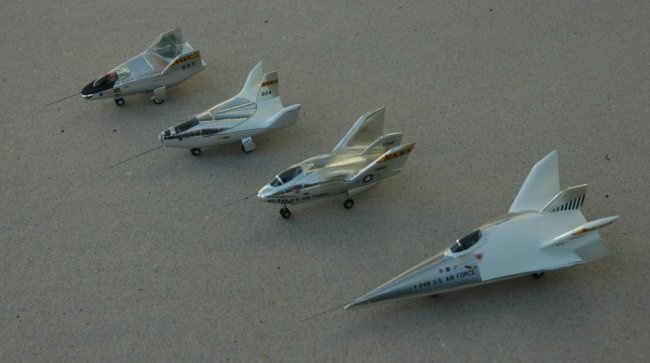
 |
| A flying boat lifting body spaceship, you say.... |
There's always the old standby of sphere ships, which to maintain the style of the setting would probably be vaguely cube shaped and rounded in something of the nature of the M4 sherman. Not great for in atmosphere use, beyond takeoffs and landings.
But now, I come to my real problem
Gravity. I'm not using artificial gravity generation, but would like at least a small amount of gravity to allow some semblance of normal life (ability to cook in a pan, sit at a table for cards that don't need magnetism or somesuch, and so on). All gravity has to come from spin gravity, either for the whole ship or more likely having a section of the ship feature a separate centrifuge portion containing the habitation modules, or from using slight superscience to maintain felt acceleration gravity. Given that the ship is meant to be usable as a ship on the surface, there are some issues with both of these methods.
Gravity, on a normal aircraft or oceangoing ship, points downwards. produced via spingrav, portions of the ship will be upside down while in atmosphere if using an included centrifuge (which may be split into a habitation block and a region not used while in gravity or otherwise still usable while upside down, or trading some space for mechanisms to allow rooms to rotate). Simply spinning the ship about an axis is difficult due a probable lack of a nice round axis had by most ships able to land planetside. Still, if a ship has a center of gravity close enough to what would be the top deck while planetside, it can rotate such that the lower deck has spin gravity. It'll look weird as heck, but if it's weird but it works it's not weird. A tumbling pigeon design does not work with the requirements of interstellar travel within the setting.

Produced via acceleration, effective gravity will point towards the back of the ship. It's possible to arrange the whole ship for acceleration gravity, and have it point upwards while it's landed like a tail-landing craft, but that comes with its own set of challenges. Suddenly the entire ship is a spacefaring skyscraper that must be navigated by steps, ladders, manlifts, elevators, and fireman's poles. It's also weird during actual flight if you use aerodynamics rather than pure engine power. Alternatively, the engines could force the ship sideways through space, such that down is always down. This results in a rather large frontal area to heavily armor, but plays quite nicely with keeping an otherwise standard deckplan, allowing systems to be navigated via hallway and corridors with a few levels.
The other options are that the ship is just in 0G or microgravity all places except where it's absolutely necessary for something resembling normal function, or that I opt to include a crude gravity generator to the setting. Micrograv is weird but manageable, and through tech and proper design pretty easily handled. Artificial gravity requires just a little bit more handwaving than allowing small amounts of constant speed acceleration gravity thanks to warp drive effects and is easily compatible with a ship designed to also function in and out of gravity.
EDIT TO ADD:
After sleeping on it, bouncing ideas, and doing some math, it seems that flying the ship in a helical flight path can generate gravity pretty darn readily. If it's stupid but it works, it isn't stupid. It requires constant thrust, but given that the ships are reactor powered and reactionlessly driven, it's the simplest solution to the 0G problem.
Saturday, December 5, 2015
GURPS Space: I just want to build stuff
I'm glad I've been paying attention to Erin and McThag on their Traveller Tuesdays, even though I'm not setting the system in the Traveller universe (that would be far too simple and make too much sense).
Got a setting I've mentioned before knocking around, that of the Moon Marines (actual military title pending, but they're space marines who's primary base is on Luna). Given that most campaign ideas revolve around the party actually playing moon marines and romping around the universe breaking things, or playing the security/away team for an exploration/free trader ship, gear's going to be a thing. In this setting, humanity is also substantially more militarized than most of the galaxy (everyone else hit the point where war became too horrible to contemplate and actually stopped, or are super honorable/gullible, or can't utilize the FTL system without crysosleep because they get incredibly nauseous and/or horny, and other such things), which means their ships need to be durable and such, and at least the basics of a space-military need to be determined. In attempting to pick out various units for this approximately TL9 setting, I made a discovery;
Ultra-Tech, which I've glanced through before, is kind of terrible if you're actually trying to use it for things with any depth. Also, approximately half of TL9 is just stuff that we have today at least as prototypes, although it was still futuristic when it was printed. Also also, basically the entire conventional guns section is errata'd, and a great deal of other stuff. It mentions that spaceships are a thing that exists, and kind of sort of gives some examples, sufficient as long as it's merely a setpiece for the party to glance past on their way elsewhere.
Spaceships has some nice depth with reasonable simplicity, but a couple things that seem off. I can't tell whether armor and weapons are balanced, or if weapons are overpowered. Damage comparison between the 100mm cannon in spaceships and ultratech are kind of weird (the warhead and projectile impact damage seem to be switched, approximately, although the damage in the table may be meant for beam weapons or just an approximation with guns using the warhead table exclusively). Decade scale makes things weird. Assuming medium or secondary batteries are "standard", it takes approximately 2 of your available 6 systems per section of the finest armor available to be able to soak an average hit,except not once warheads, armor divisors, and weapon velocity (if applicable) are factored in because those do a bajillion times more damage than it's possible to have your ship block even if every system is nothing but the finest of armor. Hooray Errata, the entire warheads table was off by a factor of 10 or so. Something still seems vaguely off, I may boost armor in some way, simplest way seems to be to treat armor as one unit and extra stacks reduce G-force.
GURPS Traveler seems decent, other than being for a specific setting. It offers better ability to armor up a streamlined ship and such, at cost of marginal requirement for calculations.
I've even busted out GURPS Vehicles to look at that for comparison
I'll probably just wind up building the ship in every system and bashing them together until I get something I'm happy with. Then I just have to fill it with crew, because it's small enough and going to be the main setting enough that it's probably a good idea to have at least a name and basic personality for every crew member.
Got a setting I've mentioned before knocking around, that of the Moon Marines (actual military title pending, but they're space marines who's primary base is on Luna). Given that most campaign ideas revolve around the party actually playing moon marines and romping around the universe breaking things, or playing the security/away team for an exploration/free trader ship, gear's going to be a thing. In this setting, humanity is also substantially more militarized than most of the galaxy (everyone else hit the point where war became too horrible to contemplate and actually stopped, or are super honorable/gullible, or can't utilize the FTL system without crysosleep because they get incredibly nauseous and/or horny, and other such things), which means their ships need to be durable and such, and at least the basics of a space-military need to be determined. In attempting to pick out various units for this approximately TL9 setting, I made a discovery;
Ultra-Tech, which I've glanced through before, is kind of terrible if you're actually trying to use it for things with any depth. Also, approximately half of TL9 is just stuff that we have today at least as prototypes, although it was still futuristic when it was printed. Also also, basically the entire conventional guns section is errata'd, and a great deal of other stuff. It mentions that spaceships are a thing that exists, and kind of sort of gives some examples, sufficient as long as it's merely a setpiece for the party to glance past on their way elsewhere.
Spaceships has some nice depth with reasonable simplicity, but a couple things that seem off. I can't tell whether armor and weapons are balanced, or if weapons are overpowered. Damage comparison between the 100mm cannon in spaceships and ultratech are kind of weird (the warhead and projectile impact damage seem to be switched, approximately, although the damage in the table may be meant for beam weapons or just an approximation with guns using the warhead table exclusively). Decade scale makes things weird. Assuming medium or secondary batteries are "standard", it takes approximately 2 of your available 6 systems per section of the finest armor available to be able to soak an average hit,
GURPS Traveler seems decent, other than being for a specific setting. It offers better ability to armor up a streamlined ship and such, at cost of marginal requirement for calculations.
I've even busted out GURPS Vehicles to look at that for comparison
I'll probably just wind up building the ship in every system and bashing them together until I get something I'm happy with. Then I just have to fill it with crew, because it's small enough and going to be the main setting enough that it's probably a good idea to have at least a name and basic personality for every crew member.
Sunday, August 9, 2015
GURPS Macheteswords, further further musings
It's much easier to work out how to stat something when you have it in hand to test and dick around with. And, as usual when doing things in GURPS, I over-complicated things. McThag said it was pretty much just Cheap, which I agreed with on the lost damage (utility edge isn't as sharp as regular, etc), but wasn't sure about the increased odds of breakage seeming wrong. Naturally I went to trying to make a new rule, as opposed to the better option of "Machetes just bend a bit rather than snapping", resulting in penalties to use but an otherwise easily fixed and still functional blade.
I also mis-remembered the mass-produced modifier given as being 75% instead of 60%, so no change to that, although I will rule that the powers of modern mass production can allow it to be applied to most modern factory-made swords (there are plenty of handmade swords still to be found for comparison, and the price difference is just about right).
And, because why not, some stats
CS Cutlass Machete: Splits the difference between cavalry saber and cutlass due to borderline size, with elements of falchion due to balance; mass produced, cheap quality (machete). Given time and equipment, may be sharpened to a good edge, at the cost of shorter edge longevity (stats given are for good quality, which requires time to sharpen).
Sword (Broadsword or Shortsword)
TL Weapon Damage Reach Parry Cost Weight ST Notes
8 Cutlass Machete SW+1 cut 1 0 $36 2 lb 10 Hilt Punch
THR imp 1 0 - 10
Handguard provides DR4 against crushing, DR2 vs everything else
CS Bowie Machete
Mass produced (60% cost), high tech good quality (40%) Long Knife.
I also mis-remembered the mass-produced modifier given as being 75% instead of 60%, so no change to that, although I will rule that the powers of modern mass production can allow it to be applied to most modern factory-made swords (there are plenty of handmade swords still to be found for comparison, and the price difference is just about right).
And, because why not, some stats
CS Cutlass Machete: Splits the difference between cavalry saber and cutlass due to borderline size, with elements of falchion due to balance; mass produced, cheap quality (machete). Given time and equipment, may be sharpened to a good edge, at the cost of shorter edge longevity (stats given are for good quality, which requires time to sharpen).
Sword (Broadsword or Shortsword)
TL Weapon Damage Reach Parry Cost Weight ST Notes
8 Cutlass Machete SW+1 cut 1 0 $36 2 lb 10 Hilt Punch
THR imp 1 0 - 10
Handguard provides DR4 against crushing, DR2 vs everything else
CS Bowie Machete
Mass produced (60% cost), high tech good quality (40%) Long Knife.
Saturday, June 13, 2015
GURPS CheatSheet: 4e Basic Set in 5 pages or less
In my quest to make GURPS a bit more playable for people who aren't crazy and read its copious amounts of rules, and to supplement my own GM screen, I went through and collected most of the major rules of GURPS into a handy little compendium. By getting just the rules, it collects the actual stuff needed to play into about 5 pages (skipping all the character generation stuff and rules attached to that, with the expectation that a player will make their own reference sheet for things that effect them).
https://www.dropbox.com/s/eb1gp2cxe0jjv9i/GURPS%20cheatsheet.odt?dl=0
Still tweaking, formatting, and adding to it, but there's the sheet as it presently is
Page 1 is basics of play: odds of 3d6 based success, the different types of tests, and when to roll.
Page 2 is combat basics, the turn order, and so on
Page 3 is rules for injury and recovery
Page 4 and 5 are further special situations, including rules for shooting things in cover, size/range/speed tables, rate of fire bonuses, and hit locations.
https://www.dropbox.com/s/eb1gp2cxe0jjv9i/GURPS%20cheatsheet.odt?dl=0
Still tweaking, formatting, and adding to it, but there's the sheet as it presently is
Page 1 is basics of play: odds of 3d6 based success, the different types of tests, and when to roll.
Page 2 is combat basics, the turn order, and so on
Page 3 is rules for injury and recovery
Page 4 and 5 are further special situations, including rules for shooting things in cover, size/range/speed tables, rate of fire bonuses, and hit locations.
Wednesday, June 3, 2015
GURPS High Tech Low Tech; Mass Production and Improvised Weapons
GURPS, for all its efforts to have rules for everything ever, leaves a number of things unmentioned and without rules. Some of them are minor and only likely to impact anything if you really are trying to dig in depth, others are a bit more jarring if you try to use them.
First up, mass production at higher tech levels of blades and similar. Low Tech has the Cutlass at $400, and mentions that the one listed in basic set for $300 is a mass produced version. This gives us a functioning mass production modifier of .75x. Thing is, that's at TL4, age of sail, when even mass produced they still had to be built Ye Olde Fashioned Way. What happens at high tech, when a properly set production line can churn out good or fine quality blades by the hundreds or thousands? Corners can be cut (or not, if it's cheaper) in ways never before possible to allow for ease of production, at the cost of appearance, even if the blade quality itself is unaffected. Many modern blades use the standard rules for the free upgrade to fine quality, or 60% price break to purchase good. These mass production musings are for such things as blades made of quality modern steel, with hardly any effort put into actually sharpening the edge and such things as ugly molded plastic grips. An example would be some things such as the Cold Steel machetes, made of pretty good steel and weighted exactly as they should be (most fall under the classification of Falchions or Small Falchions for rules), but with every corner available to cut without ruining the blade. They also come with a nearly blunt machete/utility edge, even if they're made of the same steel as the finer blades; for example, both the 1917 Bowie knife and the Bowie Machete are made of 1055 Carbon steel. As most blades are machine tempered these days as an automated process, it's unlikely that other than the anti-rust coating on the machete (which is meant to be abused) and generally simpler geometry the blades differ any. The true bowie has an MSRP of $200, online retail of $117. The bowie machete has an MSRP of $30, and an online retail of $25. Alternatively, cheap quality (20% price of usual) would explain the difference perfectly, with the difference being in the quality of the edge as purchased, provided that it is permitted to raise the quality by sharpening and refinement (assuming that mass production, rather than necessarily using poor quality steel that cannot be improved, merely doesn't bother with a fine or even good edge, and other such niceties that can be remedied with sufficient time and skill in the required areas such as blade sharpening, woodworking, even if the skill or equipment to craft a good or fine blade from scratch is not possessed). Otherwise, I may house-rule that a modern mass produced blade is treated as an opposite version of a display weapon, valued at the next step down (A good quality blade becomes cheap price, and receives reaction penalties from those who know or appreciate weapons equal what a display weapon would gain in reaction bonuses)
Other questions with GURPS are the treatment of improvised weapons; many things receive fairly sizeable penalties to use as weapons without the Improvised Weapon Master perk; Among these is the Sledgehammer, treated as a maul at -2 to skill, despite all historical examples of war maul I can find being essentially just sledgehammers. So far the main difference I've been able to come up with was possibly the use of a metal haft, or at least metal clad, but this doesn't explain the penalty to skill when they are identical save for weight and price (Sledgehammer is listed at 15 lbs, maul at 12. Of course, sledgehammers are commonly available in different weights, would a smaller sledgehammer simply be a maul at 1/8th price? The splitting maul, essentially a lightweight but sharpened sledgehammer, gets a -3 to skill to use with two handed axe/mace skill. As someone who's spent much of his life swinging axes, sledgehammers, and so on, this seems somewhat questionable. Still, not particularly hard to ignore those penalties and just treat it as using base skill.
First up, mass production at higher tech levels of blades and similar. Low Tech has the Cutlass at $400, and mentions that the one listed in basic set for $300 is a mass produced version. This gives us a functioning mass production modifier of .75x. Thing is, that's at TL4, age of sail, when even mass produced they still had to be built Ye Olde Fashioned Way. What happens at high tech, when a properly set production line can churn out good or fine quality blades by the hundreds or thousands? Corners can be cut (or not, if it's cheaper) in ways never before possible to allow for ease of production, at the cost of appearance, even if the blade quality itself is unaffected. Many modern blades use the standard rules for the free upgrade to fine quality, or 60% price break to purchase good. These mass production musings are for such things as blades made of quality modern steel, with hardly any effort put into actually sharpening the edge and such things as ugly molded plastic grips. An example would be some things such as the Cold Steel machetes, made of pretty good steel and weighted exactly as they should be (most fall under the classification of Falchions or Small Falchions for rules), but with every corner available to cut without ruining the blade. They also come with a nearly blunt machete/utility edge, even if they're made of the same steel as the finer blades; for example, both the 1917 Bowie knife and the Bowie Machete are made of 1055 Carbon steel. As most blades are machine tempered these days as an automated process, it's unlikely that other than the anti-rust coating on the machete (which is meant to be abused) and generally simpler geometry the blades differ any. The true bowie has an MSRP of $200, online retail of $117. The bowie machete has an MSRP of $30, and an online retail of $25. Alternatively, cheap quality (20% price of usual) would explain the difference perfectly, with the difference being in the quality of the edge as purchased, provided that it is permitted to raise the quality by sharpening and refinement (assuming that mass production, rather than necessarily using poor quality steel that cannot be improved, merely doesn't bother with a fine or even good edge, and other such niceties that can be remedied with sufficient time and skill in the required areas such as blade sharpening, woodworking, even if the skill or equipment to craft a good or fine blade from scratch is not possessed). Otherwise, I may house-rule that a modern mass produced blade is treated as an opposite version of a display weapon, valued at the next step down (A good quality blade becomes cheap price, and receives reaction penalties from those who know or appreciate weapons equal what a display weapon would gain in reaction bonuses)
Other questions with GURPS are the treatment of improvised weapons; many things receive fairly sizeable penalties to use as weapons without the Improvised Weapon Master perk; Among these is the Sledgehammer, treated as a maul at -2 to skill, despite all historical examples of war maul I can find being essentially just sledgehammers. So far the main difference I've been able to come up with was possibly the use of a metal haft, or at least metal clad, but this doesn't explain the penalty to skill when they are identical save for weight and price (Sledgehammer is listed at 15 lbs, maul at 12. Of course, sledgehammers are commonly available in different weights, would a smaller sledgehammer simply be a maul at 1/8th price? The splitting maul, essentially a lightweight but sharpened sledgehammer, gets a -3 to skill to use with two handed axe/mace skill. As someone who's spent much of his life swinging axes, sledgehammers, and so on, this seems somewhat questionable. Still, not particularly hard to ignore those penalties and just treat it as using base skill.
Tuesday, April 21, 2015
GURPS: Stabnshoot
GURPS has rules for melee combat. That's mostly simple, other than a few quibbles I've mentioned earlier (such as questionable scaling for high strengths with melee weaponry). It has rules for shooting, even contact shooting (+4 to hit, +2 to target's dodge; telegraphic attack with a gun/crossbow/etc).
What they do not have rules for is jamming a gun into someone and pulling the trigger. Weapons with bayonets, hearty revolvers that don't have problems functioning when you violently jam them into the unfortunate in a punchy pistolwhip, etc.
Should it be treated as a Dual weapon attack/combination? One attack as a melee weapon, then a second followup attack with the gun?
Does it count as the telegraphic attack, if it's linked in with the melee smack? If so, is the second attack at no penalty due to the +4 and -4 cancelling, with the defender getting a +1 to parry after the -1 from two attacks on the same target?
My inclination is to treat it as an all out attack (double) or dual weapon attack combo, without the bonuses and penalties for telegraphic attack as it happens "simultaneously" with the melee strike.
It's likely to come up in any setting where there are big beasties or angry people that want to get all up in your business, even moreso in a setting such as the Metro or Monster Hunter campaigns where CQB and enemies disregarding your personal space are the norm, rather than the exception.
What they do not have rules for is jamming a gun into someone and pulling the trigger. Weapons with bayonets, hearty revolvers that don't have problems functioning when you violently jam them into the unfortunate in a punchy pistolwhip, etc.
Should it be treated as a Dual weapon attack/combination? One attack as a melee weapon, then a second followup attack with the gun?
Does it count as the telegraphic attack, if it's linked in with the melee smack? If so, is the second attack at no penalty due to the +4 and -4 cancelling, with the defender getting a +1 to parry after the -1 from two attacks on the same target?
My inclination is to treat it as an all out attack (double) or dual weapon attack combo, without the bonuses and penalties for telegraphic attack as it happens "simultaneously" with the melee strike.
It's likely to come up in any setting where there are big beasties or angry people that want to get all up in your business, even moreso in a setting such as the Metro or Monster Hunter campaigns where CQB and enemies disregarding your personal space are the norm, rather than the exception.
Tuesday, April 7, 2015
GURPS Monster Hunter
Wound up with a 3DS recently, and a copy of Monster Hunter 4. Everybody who played has always told me I'd like the series, and it turns out they were right. Finally I have motivation for a fantasy campaign again that is actual low tech. And while there's a lot of custom equipment, it's not THAT custom.


It's interesting, contemplating how the development of weaponry would differ if our primary enemy as a species wasn't ourselves. If monsters the size of elephants were the norm rather than a frightening rarity, we'd no doubt have a whole slew of different weapons. We've developed large weapons for as long as we've been able, but no doubt we'd have put extra effort in with suitable foes to motivate us.
Ludicrously massive weaponry abounds in the Monster Hunter world, but at the small ends it's quite readily handled by completely stock GURPS rules; instead of large or knives as a sidearm, you carry a kukri/falchion/shortsword. Going sword and board? You have a broadsword or bastard sword instead of the shortsword that was the somewhat standard companion of shields for much of history. Spear and shield is still around and quite effective. The perk for Weapon Strength (counts only towards avoiding penalties due to low strength and benefits of high strength for things like one-handing a two-handed weapon, etc)
The first weapon shown is the old fashioned sword and board. Nothing of any difficulty or interest there, other than the possibility of making one from a giant monster's tooth or tail or whathaveyou.
Next up is among the most famous of the weapons from Monster Hunter, the so-called Greatsword. I'm inclined to have it use the 2hd Axe/Mace skill, and Very Unwieldy. High strength and it hits like a truck. You can also hold it in a defensive grip and use the Block skill with it and get a sizeable defense bonus. It is less a sword, than a bludgeon with a wedge for an edge. Telegraphic attacks are rather common to put enough momentum on it to actually swing.
After that is the warhammer. Larger than normal, but nothing really worth noting. The Maul and Great Club and so on serve well enough, bigger ones with more ridiculous strength requirements aren't hard to make.
Sword and Lance. The lance is basically just used as a spear, and in some instances IS just a spear. Other than possibly making an even larger Monster Hunting spear from the various ones listed (such as the boar spear, which is itself already a beefier spear). Not shown is a more aggressive version, called the Gunlance. I'll find a vid of that. A lot of them fold or telescope to save space when put away.
Next up is the Longsword, basically an odachi. To use it in GURPS, it's just a greatsword, or a slashing greatsword (+1 cut, -1 thrust), and maybe use the rules out of Dungeon Fantasy for making oversized weapons. Rules as written play in here just fine.
The Bowgun is, as far as I can tell, a TL5 or 6 pump shotgun, built at TL4(?). There's a lot of fairly intricate technical stuff that shows up in the series, but based on vehicles and stuff, it's probably a definite fantasy TL4, for TL4+1 or so at least. There's also a Heavy Bowgun, which is a larger, heavier bowgun. All of them shoot slugs by default, and you can load specialty ammo for elemental effects, things like bola shot, and buckshot. Big, fat, slow moving, heavy rounds? Sounds like a shotgun. Bows are also a thing, with ludicrous large knife to shortsword sized arrows that can be wielded in melee combat as such, but not shown in this vid. Ones in my world would come with a bayonet or striking area standard, because giant monsters trying to get up close.
Last up is the Switch Axe. A big two handed axe, the rear blade can fold up and over as the front of the axe blade slides down to turn it into somewhere between a greatsword and a longsword. All methods of achieving this are fairly complex, but reasonably doable. GURPS terms, probably a couple ready maneuvers to switch between forms, possibly with a chance of jamming (fast draw roll to switch faster?) Another weapon that works similar but in reverse is the Charge Blade, which is a sword and shield, but the shield can attach to the sword to make ludicrous axe. discussed later.
Now, on to stuff that didn't get shown.
The Gunlance. Essentially a bangstick with a bayonet. The chamber is loaded with rounds like the fancy, super-flash ones Hollywood uses to make ridiculous muzzle flash, for the purpose of blowing things apart. I see no reason you couldn't have a gunlance just have a proper shotgun in it, same as the bowgun, and it's just harder to use by virtue of being made for one-handed use.
Other than a few oddities like the spread-shot, the bow doesn't do anything you wouldn't expect. other than be ENORMOUS. Behold.
I'm thinking just a longbow, or compound longbow, with those heavy arrows trading range for damage over regular broadheads. Also, you can use them to stab and slash, because it's large by the standards of spears, let alone arrows.
The charge blade is a large shield with a mating sword. Used separately, it's sword and board as standard. Attach the shield to the sword, and it's a huge greataxe. More practical than the switch axe in that it actually comes with some defense when not in ludicrous axe mode.
Another weapon is the Hunting Horn. Basically a giant instrument that can be used as a bludgeon, it's just a musical hammer. I'd treat it as a means for magic-based music, or have one that similarly had syntactic magic runes built into it to be adjusted and used by the wielder, per Thaumatology.
There's also the insect glaive, but it's basically just another spear/polearm with a handy dandy helperbug. I'd probably not bother to make it its own thing, and just have the lances/spears usable without a shield.
Sunday, March 29, 2015
GURPS gun mods: Spreader Choke
http://www.paradigmsrp.com/gator-shotgun-spreader/
GURPS: Gun Fu gives special rules for allowing shotguns to use their effective RoF for things like Suppressing Fire and Spraying Fire as a cinematic rule. I'm inclined to permit the use of such weapon mods, known as a duckbill or gator choke, to allow the same in a realistic campaign.
I'm torn, however, between treating the attack as a narrow cone or just permitting spraying fire/etc. As a cone, based on performance in videos, I'd treat it as 2 yards wide at 1/2D range, and within 1/2 of 1/2D it's just shotgun rules as normal. As a cone, I'd also probably say you could aim it at a single target in the center and get maybe 2/3 of the shot in the center hex and 1/6 through the hexes on either side, or spin the shotgun/choke vertically to use mostly-normal shotgun rules.
Treating it as a cone, at 1/2d range you'd get 4 pellets per 12g 00 buck shell in each of the hexes if you aimed right between them, or if you aimed at a single hex you'd have 6 pellets and 1 on either side per shell.
Treating it as spraying fire would just use regular rules for lost projectiles across empty space/etc.
GURPS: Gun Fu gives special rules for allowing shotguns to use their effective RoF for things like Suppressing Fire and Spraying Fire as a cinematic rule. I'm inclined to permit the use of such weapon mods, known as a duckbill or gator choke, to allow the same in a realistic campaign.
I'm torn, however, between treating the attack as a narrow cone or just permitting spraying fire/etc. As a cone, based on performance in videos, I'd treat it as 2 yards wide at 1/2D range, and within 1/2 of 1/2D it's just shotgun rules as normal. As a cone, I'd also probably say you could aim it at a single target in the center and get maybe 2/3 of the shot in the center hex and 1/6 through the hexes on either side, or spin the shotgun/choke vertically to use mostly-normal shotgun rules.
Treating it as a cone, at 1/2d range you'd get 4 pellets per 12g 00 buck shell in each of the hexes if you aimed right between them, or if you aimed at a single hex you'd have 6 pellets and 1 on either side per shell.
Treating it as spraying fire would just use regular rules for lost projectiles across empty space/etc.
Tuesday, March 24, 2015
GURPS: Perks and skill musings
Some more musings on GURPS and perks and such that are missing, and pondering on the workings of melee combat damage.
PERK: Walk the Trigger. Normally semi automatic weapons cannot be used for Spraying Fire, even if they meet the 5+ RoF through things like Fast Firing. Walk the Trigger means the shooter has practiced maintaining a fast, steady cadence of fire separately from the point of aim, allowing the gun to be used in a manner identical to that of a full auto.
PERK: Running Ready. You've practiced controlling your body. So long as you do not exceed your Long Distance move speed and the objects to be interacted with are not linked to bodyparts used for motion, you may perform a ready maneuver while moving. EXAMPLE, drawing a weapon or magazine from a quality belt holster while running is fine, doing the same from holsters lashed to your thighs is not.
PERK: Recoil compensation. Through sheer mass or special stances, you've learned to keep control of your weapon. When using the higher fire rates of Fast Firing with a semiauto gun, reduce the added recoil by 1. Cannot reduce the recoil below base value, only serves to allow more accurate high RoF shooting.
High Strength Melee Weapons
GURPS 4e is pretty clearly balanced for people within a few points of "average" ST of 10. This works well enough, unless you have a big bruiser of a character. Where a difference between a knife and a broadsword's average damage is quite significant at ST 10, it becomes almost negligible at something like ST 17. The rules for melee damage scale based on ST fairly well, and include a measure of the difference in power into the progression, but a Swing+1 sword remains Swing+1, whether it's being driven by a 1d-1 swing or a 3d swing. I can't think of anything better to replace it with that doesn't adding probably needless levels of complexity, but it still seems to need a bit of pondering.
High Skill Melee Weapon Damage
Unarmed combat in GURPS gains bonuses as your skill increases, which is good because much of combat is all in the technique. The problem I see is that to do this with weapon skills requires the Weapon Master advantage. Weapon Master damage bonuses follow the progression of Boxing and Karate, with DX+1 skill giving +1 damage/die, and DX+2 skill giving +2 damage/die. I'm inclined to house rule that high skill with a melee weapon follows the bonus progression of Brawling, with +1 dmg/die at DX+2 skill. Not a lot, but enough to represent the boost gained due to proficiency.
PERK: Walk the Trigger. Normally semi automatic weapons cannot be used for Spraying Fire, even if they meet the 5+ RoF through things like Fast Firing. Walk the Trigger means the shooter has practiced maintaining a fast, steady cadence of fire separately from the point of aim, allowing the gun to be used in a manner identical to that of a full auto.
PERK: Running Ready. You've practiced controlling your body. So long as you do not exceed your Long Distance move speed and the objects to be interacted with are not linked to bodyparts used for motion, you may perform a ready maneuver while moving. EXAMPLE, drawing a weapon or magazine from a quality belt holster while running is fine, doing the same from holsters lashed to your thighs is not.
PERK: Recoil compensation. Through sheer mass or special stances, you've learned to keep control of your weapon. When using the higher fire rates of Fast Firing with a semiauto gun, reduce the added recoil by 1. Cannot reduce the recoil below base value, only serves to allow more accurate high RoF shooting.
High Strength Melee Weapons
GURPS 4e is pretty clearly balanced for people within a few points of "average" ST of 10. This works well enough, unless you have a big bruiser of a character. Where a difference between a knife and a broadsword's average damage is quite significant at ST 10, it becomes almost negligible at something like ST 17. The rules for melee damage scale based on ST fairly well, and include a measure of the difference in power into the progression, but a Swing+1 sword remains Swing+1, whether it's being driven by a 1d-1 swing or a 3d swing. I can't think of anything better to replace it with that doesn't adding probably needless levels of complexity, but it still seems to need a bit of pondering.
High Skill Melee Weapon Damage
Unarmed combat in GURPS gains bonuses as your skill increases, which is good because much of combat is all in the technique. The problem I see is that to do this with weapon skills requires the Weapon Master advantage. Weapon Master damage bonuses follow the progression of Boxing and Karate, with DX+1 skill giving +1 damage/die, and DX+2 skill giving +2 damage/die. I'm inclined to house rule that high skill with a melee weapon follows the bonus progression of Brawling, with +1 dmg/die at DX+2 skill. Not a lot, but enough to represent the boost gained due to proficiency.
Sunday, January 4, 2015
GURPS Punktech: powered melee weapons
Through a great deal of the various punk genres, powered or otherwise enhanced melee weapons of various sorts are rather common. Chainswords, enormous war-drills, flaming blades, and axes with a circular saw for a blade.
GURPS provides no provisions for such weapons, but tools and stats that could be used are provided through most of high tech. Stats for ultra-tech weapon modifications such as Vibro will also be used in their creation.
A few things will be determined based on tech level.
TL0+(5 through 8) (Stonepunk): Your powered weapon is some manner of animal. It can get grouchy with you, and requires the usual care and maintenance one might expect.
TL4+1 (Clockpunk): Wound spring drive. Gives minimal time of operation between windings, but it's a freaking clockwork powered weapon. Generally simple, such as the buzz axe or war drill. Relatively lightweight and very quiet. At higher tech levels, may be equipped with another drive source to run it when the spring is unwound, or to rewind it quickly. Rewinding a weapon requires a winding key and 5 seconds of cranking per 1 second of run time, except on smaller weapons where a manual hand crank may be included. Large spring assemblies can provide power for about a minute from full wind, while a squeeze-cranked weapon can store 15 seconds. 2x weight for correctly sized spring assembly (Replaces modifier for Chain and Buzz weapons. Larger assemblies can be built separately and linked to weapon with flexible whip). ST increases to that required by other weapons of that size.
TL5+1 (Steampunk): Steam/air drive. Mechanical weapons require compressed air or a steam line, typically from a backpack source. Larger suits, vehicles, etc. may have the compressor or steam generator integrally, assuming they don't use such power for their own operation. Always loud when active, often accompanied by billowing clouds of steam or dust kicked up by the high pressure. Pressure source must be maintained (compressed air bottle, or steam generator at operating temperature). Provided power is available, can roar to life with essentially no wind-up time.
Purchase compressed air tanks as per Air Tanks, High Tech p.74. Steam generator is $500, 25 lbs.
TL6+1 (Dieselpunk and Raygun Gothic): Engine drive. May or may not produce a lot of smoke, sounds like most running lawncare power tools. Must be started and kept idling as with any other two stroke power tool. Engine is often carried as a pack, with a flexible coupling to connect power to the blade. Medium Backpack Engine is $300, 10 lbs, if attached to weapon, the weapon requires +3 ST or becomes more unbalanced.Takes whatever fuel the engine is designed for.
Electric drive is available, see Atomicpunk and double weight and cost for stats.
TL7+1 (Atomicpunk or alternate timeline): Electric motor power. Power supplied by batteries (regular or nuclear, depending on setting). Rev up happens quickly, and even while running sound is kept to a moderate level. Can be kept on but not running nearly indefinitely. Motor size is determined by size and type of weapon. Small blades (large knife and shorter) use 1 lb motors, long knives and shortswords use a 2 lb motor, broadsword and bastard sword sized blades use a 4 lb motor, and greatswords use 6 lb motors. Scaled up weapons increase the motor size proportionally.
TL8+1/9 (Cyberpunk): Electric motor power. See TL7+1, halve weight and cost for superior motors/batteries/etc.
We'll start with the biggest one, featured prominently in some cyberpunk worlds, and most famously the world of Warhammer 40K; The CHAINSWORD. Or, chainblades in general, since the technology is versatile and can be applied to make a chain version of most blade things, though at lower tech levels the blades tend to be much larger to make full use of the weight of the power source.
Both chainsaws and vibro weapons add 1d of damage to the user's regular strength-based weapon damage. We'll keep that. Vibro, however, emits only a barely perceptible low hum, requires very little power to run, and gives a fairly substantial armor divisor. On top of that, it's only available at TL10. On the other hand, prototype chainsaws show up at TL6, with them becoming practical at TL7. They do the same +1d of damage, but with an armor multiplier when not equipped with carbide blades, and a chance of the chain snapping on any contact with something they can't cut. We'll be keeping the +1d, modified for power source according to tech level (noise, weight, etc). Because a chainsblade is designed simply to do more damage, rather than gouge material, with regular steel blades there is no change in armor penetration, and carbide teeth give an armor divisor of (2). Combined with Superfine or equivalent, the armor divisor increases, but not as much as it would with Vibro, with (1) becoming (2), and (2) going to (3). Because of the difference in chain and tooth construction, chains do not catch and snap. A variant with reciprocating blades, such as a Sawzall, but it is functionally the same. Weight and required ST of weapon is 1.5x, plus any modifiers for the power source.
Next up is the Buzz weapon. Buzz axes feature prominently in the Borderlands series, and a great many post apocalyptic games, where the saw blade used as an axe head may or may not be connected to power. Van Helsing's Tojo blades from the 2004 movie could be considered a hand cranked version of a buzz knife (treat as clockwork). Buzz weapons add +3 damage and an armor divisor of (2) at any level. No change in weapon weight other than inclusion of power source.
War Drills are just what it says on the tin. Most famously used by the Big Daddies of the Bioshock game series, they are massive metal drills that often wrap around the outside of the forearm, often with spiked protrusions along the shaft of the auger. They are optimized for grinding flesh, and only have an armor divisor of (2) if carbide tipped. Primarily used to stab, stabbing with the tip while running does Thrust+2d+2 pi++, and bashing with the side does +2 and does cutting damage while the drill is running. Use whatever skill is closest to the drill's setup, typically Brawling (for those worn around the arm) or Spear (for those held with two hands on approximately a haft). They tend to be very heavy, but those built with a relatively small drill may be wielded exactly as any spear. A small drill (1 foot long, approximately 30 degree taper) weighs 10 lbs plus drive system (assume 5 lbs of springs for clockpunk), and a giant drill weighs 25 lbs (with 15 lbs of springs for clockpunk). Giant drills do increased damage when used as a bludgeon, and count as a small shield for +1 DB.
Breakers are a type of weapon unto themselves, and are wielded in the manner of a war drill, or mounted to the arm and used to strike with. Regardless of their implementation, breakers are effectively miniature jackhammers. They show up most commonly attached to mecha and power armor, with variations present in WH40K, Armored Core, and anime series such as Big O. Breakers at clockpunk level (4+1) are only available as single shot weapons, releasing their entire spring winding in a single shot. At higher levels, with a source of high pressure or sufficiently powerful motor, they can be used in a manner not unlike that of a jackhammer, although they tend to be far smaller and less powerful for portability and wield-ability. Unlike war drills, breakers cannot apply their boosted damage except on striking with the tip, although tip slashes performed with them are extremely damaging. They do Thrust+3d(2) pi++ damage and weigh around 20 lbs for repeating variants.
Electro weapons imbue your violence with the power of LIGHTNING!(lite). Available once electricity becomes available, it's pretty much a cattle prod rigged to a weapon of some kind (a pair of blades, generally, with each blade serving as a contact, although heavy bashing instruments such as maces, provided the striking surfaces can be insulated from one another for use as contacts, are quite common). Unlike a stun gun, it is adjusted to inflict additional damage, and even has a chance of causing a heart to stop. Deals 1d of burn damage and incapacitates on a failed HT-3 roll per normal stun guns. $100, 2 lb available at TL5+1 and beyond.
Flame weaponry marries a modified cutting torch or pocket torch to a weapon, often a blade (blades similar to those of a non-running chainblade are common, alternating between blade teeth and flame nozzles). Adds 1d-2 of burn damage per second and runs on butane. An average $1 refill will get you about 4 minutes of active blade time. Available at TL5+1 and beyond. At TL7+1 and up, a plasma generator backpack and compressed air tank (see Plasma Cutter, High Tech p. 27) will bump this damage up to 2d+2(2) per second (the plasma is split between several nozzles). Regular flame upgrade cost is $20/nozzle, weight is negligible, making it popular for those looking for a flashy way to add damage to their melee combat.
Prototype Rocket Hammer: Almost identical to the TL9 rocket hammer given in Ultra Tech, the prototype rocket hammer is a far simpler affair. The combination of parts becomes available at TL4+1: Reliable springs to power a rotating hammer, percussion primers, and rockets. Small, fast burning solid fuel rockets are used, the primer ignited by the hammer to produce reliable, near-instant ignition. They're not quite as powerful as the TL9 version, giving +4 ST for the hit and +2 ST required for that swing. The mechanism costs about $150 at TL 4+1 or 5, and drops by $25 per TL after. Each mechanism only holds one shot, and must be centered along the axis of the weapon to avoid producing a spin that gives penalties. Multiple shots may be added to a weapon of sufficient size to hold the mechanism and motors. Replacement motors are $15 apiece.
Prototype Rocket Hammer: Almost identical to the TL9 rocket hammer given in Ultra Tech, the prototype rocket hammer is a far simpler affair. The combination of parts becomes available at TL4+1: Reliable springs to power a rotating hammer, percussion primers, and rockets. Small, fast burning solid fuel rockets are used, the primer ignited by the hammer to produce reliable, near-instant ignition. They're not quite as powerful as the TL9 version, giving +4 ST for the hit and +2 ST required for that swing. The mechanism costs about $150 at TL 4+1 or 5, and drops by $25 per TL after. Each mechanism only holds one shot, and must be centered along the axis of the weapon to avoid producing a spin that gives penalties. Multiple shots may be added to a weapon of sufficient size to hold the mechanism and motors. Replacement motors are $15 apiece.
Subscribe to:
Posts (Atom)